-
Xuntong specializes in testing services for electrical accessories, consumer electronics, lighting, wireless, toys and other products.




Electromagnetic Radiation Tolerance Test (RS)
Overview of Radiated Immunity (RS)
This standard mainly introduces the test methods of the international standard IEC61000-4-3:2006, which corresponds to the national standard GB/T17626.3: 2006 “Electromagnetic compatibility Test and measurement techniques-Radio frequency electromagnetic field radiated immunity”.
Purpose and application of radiated immunity test
The main source of disturbance involved in this standard is the electromagnetic field generated by radio frequency radiation sources in the frequency range of 80MHz to above 2000 MHz. For example, electromagnetic fields generated by radio stations, television stations, fixed or mobile radio transmitters and various industrial radiation sources (the current upper frequency of this standard has been raised to 6000MHz, which is related to the frequency of the currently used wireless communication equipment. Many wireless communication equipment use the frequency of 2.4GHz or 5.6GHz). Electrical and electronic equipment operating in this electromagnetic field will be affected by the electromagnetic field, thus affecting the normal operation of the equipment. Therefore, the purpose of this standard is mainly to establish a public reference for evaluating the performance of radio frequency electromagnetic field radiation immunity, and provide a basic reference for professional technical committees or users and manufacturers of relevant products.
Common terminology for RF electromagnetic field radiated immunity (RS) testing
(1)anechoic chamber
Shielded room equipped with wave-absorbing materials to reduce radio wave reflections on inner surfaces
(2)semi-anechoic chamber
Except for the reflective grounding plate installed on the ground, the rest of the inner surfaces are equipped with a shielded room with wave-absorbing material.
(3)antenna
A device that transmits radio frequency signal source power into space or receives space electromagnetic energy and converts it into electrical signals.
(4)far-field
The region of the electromagnetic field where the power density generated by the antenna is approximately inversely proportional to the square of the distance.
(5)field strength
Field strength is used for far-field measurement, which can be an electric or magnetic field component and can be expressed as V/m,A/m or W/m².
(6)polarization
The direction of the electric field vector of the radiating electromagnetic field.
(7)scanning
Sweeps over a frequency range continuously or in steps.
Radio frequency electromagnetic field radiated immunity (RS) test level and selection
Radio frequency electromagnetic field radiated immunity (RS) test level
| Frequency range 80MHz to 1000MHz | |
| Radiated immunity test level | Radiated immunity test field strength (V/m, field strength unmodulated) |
| 1 2 3 X |
1 3 10 specific |
| 1) X is an open level that can be specified in the product specification | |
Test level of protection against radio frequency radiation from digital radiotelephone.
Radio frequency electromagnetic field radiated immunity (RS) test level frequency range 800MHz to 960MHz and 1400MHz to 2000MHz radiated immunity test level Test field strength (V/m, field strength unmodulated) 1234X131030 Specific 1) X is an open level and can be specified in the product specification
Ø Category 1: Low electromagnetic radiation environment. Local radio/radio/television stations and low-power transmitters/receivers located 1km away transmit typically low levels.
Ø Category 2: Moderate electromagnetic radiation environment. Using low-power portable transmitters and receivers (typically rated less than 1W) but limited to use near the equipment is a typical commercial environment.
Ø Category 3: Severe electromagnetic emission environment. Portable transmitter and receiver (typical rating of 2W or greater) that can be used close to the device but at a distance of less than 1m. There are high-power broadcast transmitters and industrial, scientific and medical equipment nearby, which is a typical industrial environment.
Ø Category ×: × is the level of openness specified by negotiation or product specifications and product standards.
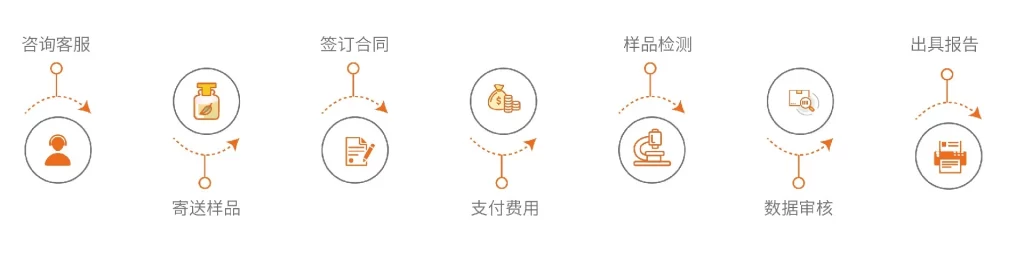
service process
 WeChat

 Submission Successful
 WeChat Official Account