-
Xuntong specializes in testing services for electrical accessories, consumer electronics, lighting, wireless, toys and other products.



 Service Hotline 18617145297
Hairdryers, curling irons and straighteners are handheld heating products with both a high-speed motor and exposed heating wire, used in close contact with the head. Once overheating or insulation fails, the consequence is serious. Ningbo Xuntong Standard has found in testing that non-compliance in these products concentrates on overheat protection and mechanical strength. This article reviews the most frequent failure modes and offers rectification ideas.
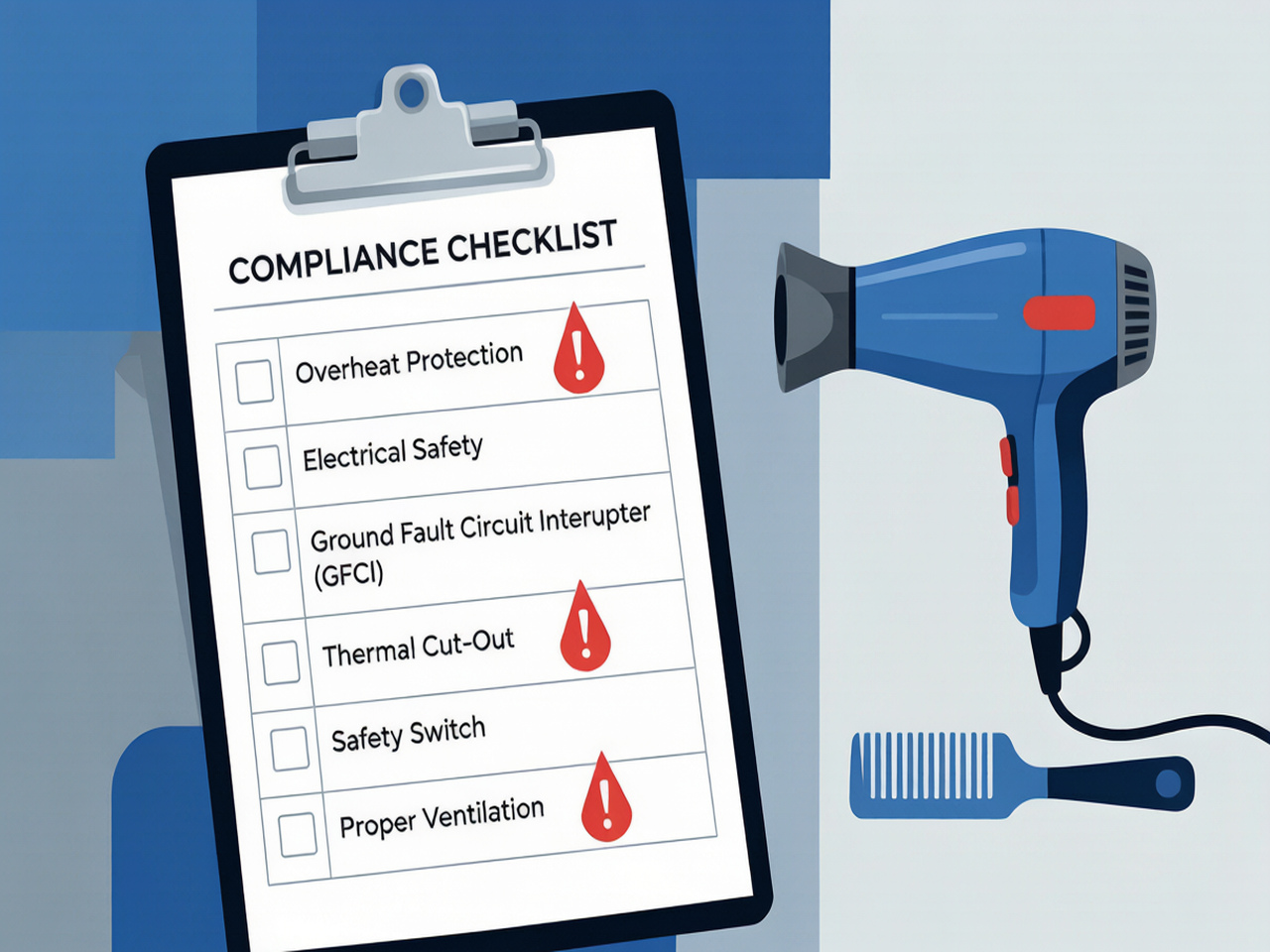
The heating wire of hair care appliances operates at high temperature, and the standard requires a reliable overheat protective device that can still cut power when the thermostat fails. The most common failure is relying on a single thermostat with no independent limiter, or a limiter poorly contacted with the heating wire causing delayed action. Ningbo Xuntong Standard recommends dual temperature protection with the limiter placed close to the heat source.
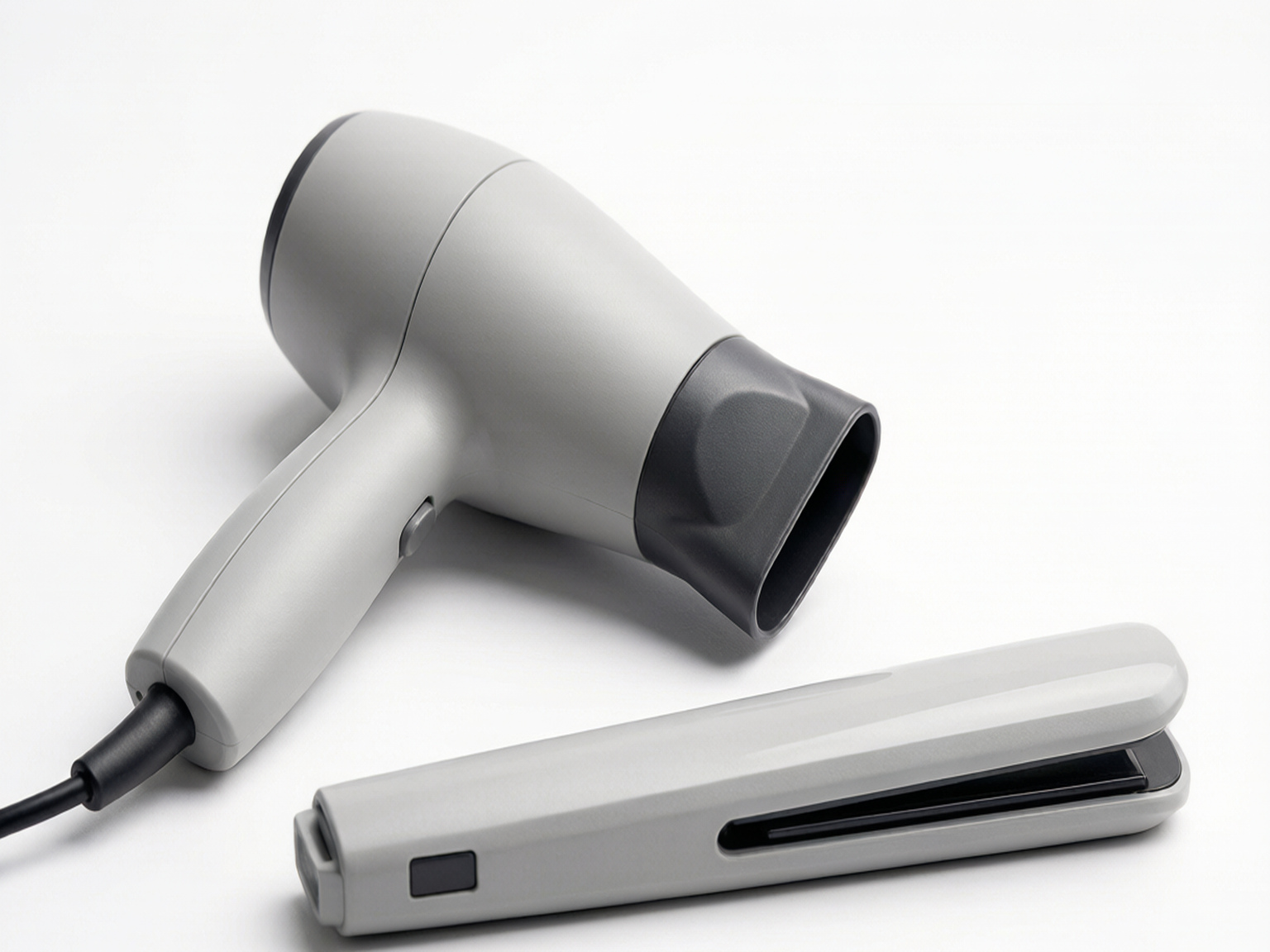
Temperature rise of the air outlet, handle and nozzle must stay within limits. Some products, chasing high airflow in a small body, have insufficient insulation causing a hot handle, or the nozzle overheats after prolonged use. Rectification includes adding air-duct insulation, using high-temperature enclosure material, and validating the nozzle with thermal simulation.
The close proximity of motor carbon brushes and heating-wire terminals to accessible metal is the second major problem. Under damp conditions or internal dust accumulation, tracking is easy. Rectification should add barriers, use high-temperature sleeves, and reserve compliant spacing at the PCB layout stage.
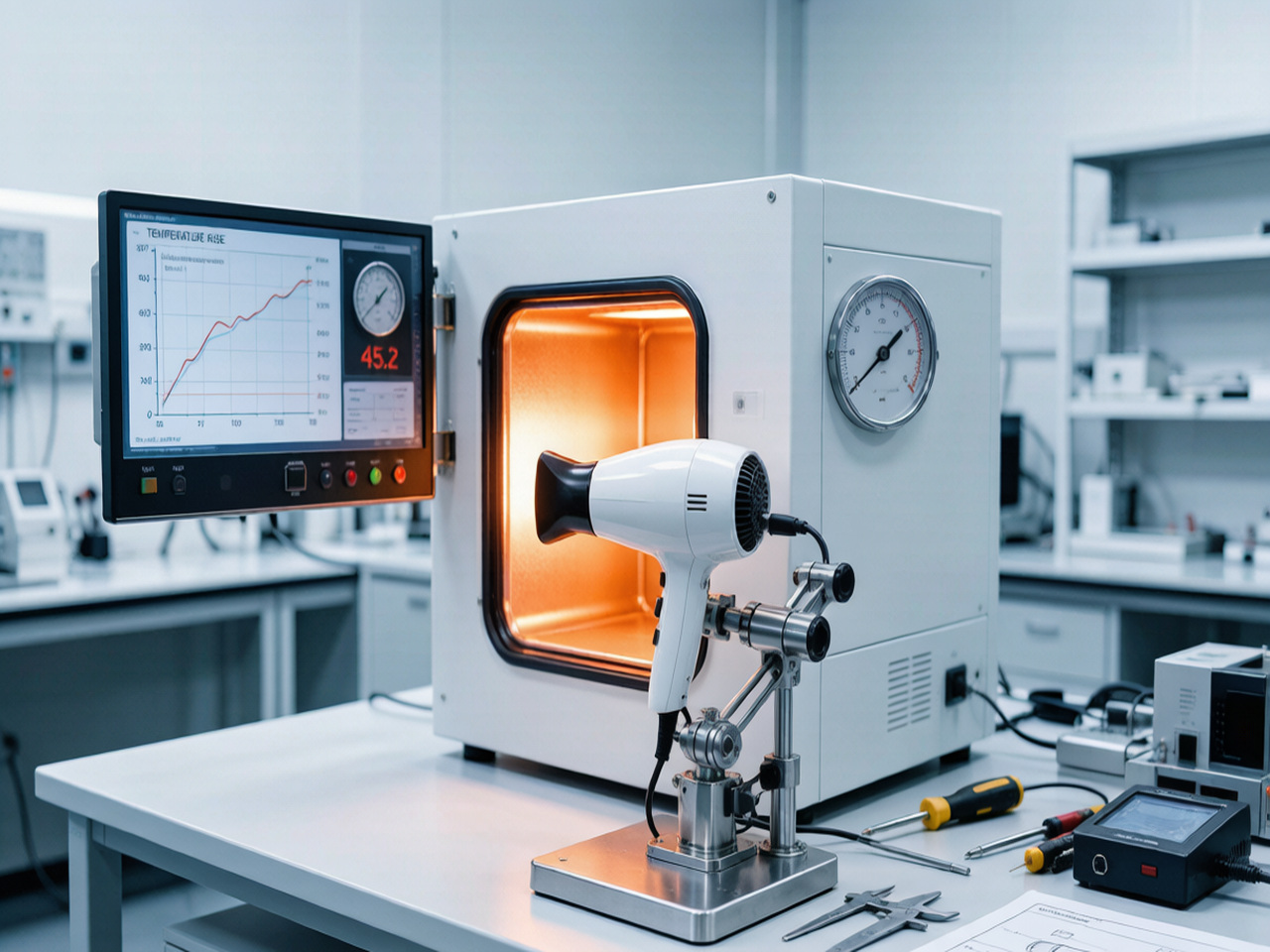
The standard includes abnormal tests such as inlet blockage and drop. If the inlet is covered by a towel and the motor locks without timely protection, temperature rises rapidly and may even cause fire; an enclosure cracking after drop and exposing live parts is also a failure. Ningbo Xuntong Standard reminds that locked-rotor protection is both an advantage and a mandatory pass item, and must be considered at the circuit design stage.
Ningbo Xuntong Standard provides pre-testing, non-compliance diagnosis and rectification support for hair care appliances under IEC 60335-2-9 / GB 4706.15, covering overheat protection, temperature rise, creepage and locked rotor, and assists with CE, UKCA, ETL and other certifications. More standards interpretation is available in the regulations and standards column, appliance testing capability in the appliance testing column, and the official Ningbo Xuntong Standard website offers the quotation guide. Finding problems before mass production minimises rectification cost.
 WeChat


 Submission Successful
 WeChat Official Account