-
Xuntong specializes in testing services for electrical accessories, consumer electronics, lighting, wireless, toys and other products.



 Service Hotline 18617145297
EU WEEE directive
On July 24, 2012, the European Union issued a new version of the Waste Electrical and Electronic Equipment (WEEE) Directive 2012/19/EU in its Official Gazette, replacing the original WEEE Directive 2002/96/EC, which officially came into effect on August 13, 2012. Its purpose is to reduce the amount of waste electronic and electrical equipment generated and promote the recovery, reuse and recycling of waste electronic and electrical equipment. The new WEEE Directive stipulates that starting from August 15, 2018, it will be controlled in accordance with the scope of six categories of products specified in Annex III, and products must meet the requirements for material reuse and recovery rates in products specified in Part 3 of Annex V.
Manage product scope
| Category serial number | product category names | product examples |
| Category 1 | Temperature exchange equipment | Refrigerators, freezers, automatic cold product transfer equipment, air conditioning equipment, dehumidification equipment, heat pumps, oil-containing radiators and other temperature exchange equipment that uses non-aqueous liquids for temperature exchange |
| Category 2 | Displays, monitors and devices with screen areas greater than 100 square centimeters | Display screen, TV, LCD photo frame, monitor, portable computer, notebook computer |
| Category 3 | lamp | Fluorescent lamps, straight fluorescent lamps, compact fluorescent lamps, high intensity discharge lamps (including pressure sodium lamps and metal halide lamps), low pressure sodium lamps, LED lamps |
| type 4 | Large equipment (any external size exceeds 50 cm) | Washing machines, dryers, dishwashers, electric cookers, electric ovens, electric hot plates, lighting equipment, equipment for reproducing sound or images, music equipment (excluding pipe organs installed in churches), knitting and weaving equipment, mainframe computers, large printing machines, copying equipment, large coin-operated slot machines, large medical equipment, large monitoring equipment, large machines that automatically deliver products and money, photovoltaic panels |
| Category 5 | Small equipment (no external size exceeds 50cm) | Vacuum cleaners, carpet cleaners, cleaning appliances, lighting, ventilation, irons, toast stoves, electric scissors, electric kettles, electronic clocks and watches, razors, electronic scales, hair and body care equipment, calculators, radios, cameras, video cameras, audio equipment, music equipment, equipment that reproduces sound or images, electric toys, sports equipment, computers for cycling/diving/running/rowing, smoke sensors, heating regulators, thermostats, Small electronic and electrical tools, small medical equipment, small monitoring equipment, small machines for automatic product delivery, small equipment integrating photovoltaic panel cells |
| type 6 | Small IT and telecommunications equipment (no external size exceeds 50cm) | Mobile phones, GPS, pocket computers, routers, personal computers, printers, phones |
Latest 3R minimum target
| product category | Minimum recovery target | Minimum reuse + recycling goal |
| Category 1, Category 4 | 85 wt% | 80 wt% |
| Category 2 | 80 wt% | 70 wt% |
| Category 5, Category 6 | 75 wt% | 55 wt% |
| Category 3 | 80 wt% | / |
interpretation of terminology
3R: Recovery, Re-Use and Recycling. Recycling includes reuse, recycling, energy recovery, etc.
Recycling is any operation that achieves these primary results by replacing other materials for a useful purpose in a business or broader economic environment, or that the waste is otherwise used to achieve a particular function, or is intended to be used to achieve that function;
Reuse refers to the reuse of products or parts that have not been scrapped for any operation that uses them for the same purpose as they were intended;
Recycling refers to any recycling operation that reprocesses end-of-life materials into products, materials or substances, whether for its original purpose or for another purpose.
enterprises to cope with
With the implementation of the “Circular Economy Strategy” in EU countries, manufacturers of electronic and electrical products and their parts that intend to export to the EU should take into account the material 3R requirements of the WEEE Directive at the beginning of product design, and give priority to the use of safe and environmentally friendly materials. Substitute materials containing hazardous substances to ensure product export compliance.
LCS service
LCS has a hazardous substance testing laboratory and a professional WEEE risk analysis technical team to provide customers with one-stop services such as WEEE 3R assessment, consumer product safety and restricted substance testing, supply chain management and control plan formulation and compliance consultation.
Remarks:
WEEE: Waste Electrical and Electronic Equipment
 WeChat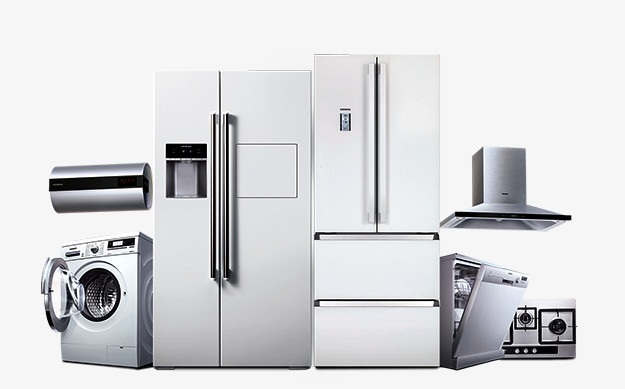

 Submission Successful
 WeChat Official Account