-
Xuntong specializes in testing services for electrical accessories, consumer electronics, lighting, wireless, toys and other products.



 Service Hotline 18617145297
In modern life, home appliances have become an indispensable part of people’s daily lives. From the refrigerator and stove in the kitchen to the TV and stereo in the living room, from the air conditioner and air purifier in the bedroom to the washing machine and water heater in the bathroom, home appliances have brought great convenience to our lives. However, to ensure that these home appliances can operate stably and reliably during long-term use, strict reliability testing is indispensable.
I. Importance of reliability testing of household appliances
The reliability of home appliances is directly related to consumer experience and safety. If home appliances fail frequently during use, it will not only bring a lot of inconvenience to consumers, but may also pose a threat to the safety of consumers ‘lives and property. For example, if a refrigerator is not cooled, food may deteriorate, a malfunctioning washing machine may damage clothing, and a leaking air conditioner may cause electrical accidents. Therefore, through reliability testing, potential quality problems of home appliances can be discovered in advance and the products can be ensured to have sufficient reliability before being introduced to the market, thereby providing consumers with high-quality home appliances.
2. Contents of home appliance reliability testing
1. Environmental adaptability test
Household appliances will face various environmental conditions during use, such as temperature, humidity, air pressure, vibration, impact, etc. Environmental adaptability testing is to simulate these different environmental conditions and test the performance and reliability of home appliances in various environments. For example, a refrigerator is placed in a high temperature and high humidity environment to test whether its cooling performance is affected; a washing machine is subjected to vibration and impact tests to verify whether its structure is firm.
2. Electrical performance test
Electrical performance is one of the core properties of home appliances, which is directly related to the use effect and safety of the product. Electrical performance testing includes testing of voltage, current, power, frequency, insulation resistance, grounding resistance and other parameters. Through these tests, it is possible to ensure that home appliances can operate stably within the normal working voltage and current range, while ensuring the insulation performance and grounding safety of the products.
3. Mechanical performance test
Home appliances usually contain various mechanical components, such as motors, transmissions, switches, etc. Mechanical performance testing mainly inspects the strength, durability and reliability of these mechanical components. For example, a long-term operation test is carried out on the motor to check whether it will cause overheating, burning and other faults; the switch is subjected to repeated operation tests to check its service life.
4. Safety testing
Safety is the most basic requirement for home appliances, and any home appliance must meet relevant safety standards. Safety testing includes electrical safety testing, mechanical safety testing, fire safety testing, etc. For example, an electrical strength test is carried out to check whether the insulation properties of the product meet the requirements; a shell protection test is carried out to check whether the product can prevent the human body from coming into contact with live parts; and an overload protection test is carried out to check whether the product can automatically cut off the power supply when overload occurs.
3. Methods for reliability testing of home appliances
1. Laboratory testing
Laboratory testing is one of the main methods for reliability testing of home appliances. In the laboratory, various professional test equipment and instruments can be used to simulate various environmental conditions and use scenarios to conduct comprehensive and systematic testing of home appliances. Laboratory testing has the advantages of controllable test conditions and accurate test results, but it also has shortcomings such as high test cost and long test cycle.
2. Accelerated life test
Accelerated life testing is a testing method that evaluates the life of home appliances by increasing test stress and shortening test time. Accelerated life testing can obtain product reliability information in a short period of time and provide a basis for product design and improvement. However, accelerated life testing requires the establishment of a reasonable accelerated model, otherwise the test results may be inconsistent with the actual situation.
4. Development trend of home appliance reliability testing
1. Intelligent testing
With the development of artificial intelligence, big data, the Internet of Things and other technologies, home appliance reliability testing will also develop in an intelligent direction. Intelligent testing can realize the automation and intelligence of the testing process and improve test efficiency and test accuracy. For example, through sensors and data analysis technology, the operating status of home appliances can be monitored in real time and the failure time of the product can be predicted; through artificial intelligence algorithms, test data can be automatically analyzed and test reports can be generated.
2. Green test
With the continuous improvement of environmental awareness, home appliance reliability testing will also pay more attention to green environmental protection. Green testing can reduce energy consumption and environmental pollution during the testing process and achieve sustainable development. For example, energy-saving testing equipment and instruments are used to reduce energy consumption during the testing process; environmentally friendly testing materials and methods are used to reduce environmental pollution during the testing process.
3. Collaborative testing
The reliability of home appliances is often affected by many factors, such as design, manufacturing, materials, and processes. Therefore, the reliability testing of home appliances requires the coordination of all parties. Collaborative testing can achieve seamless connection between design, manufacturing, testing and other aspects, and improve product reliability and quality. For example, through the collaborative work of design, manufacturing, testing and other departments, reliability issues can be considered during the product design stage, thereby reducing later testing and improvement costs.
Reliability testing of home appliances is a key link to ensure the quality and safety of home appliances. Through strict reliability testing, potential quality problems of home appliances can be discovered in advance and high-quality home appliances can be provided to consumers. With the continuous advancement of technology, home appliance reliability testing will continue to develop and innovate, providing more powerful support for the development of the home appliance industry.
 WeChat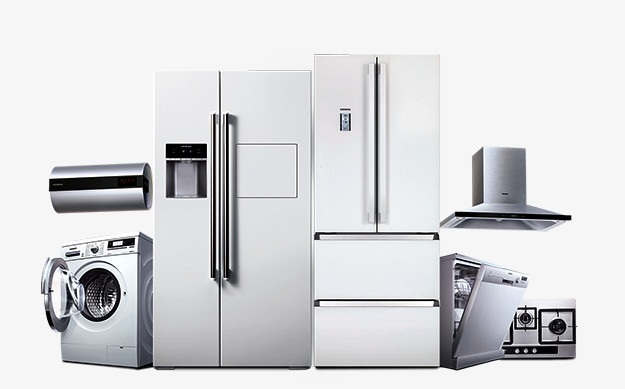


 Submission Successful
 WeChat Official Account