-
Xuntong specializes in testing services for electrical accessories, consumer electronics, lighting, wireless, toys and other products.



 Service Hotline 18617145297
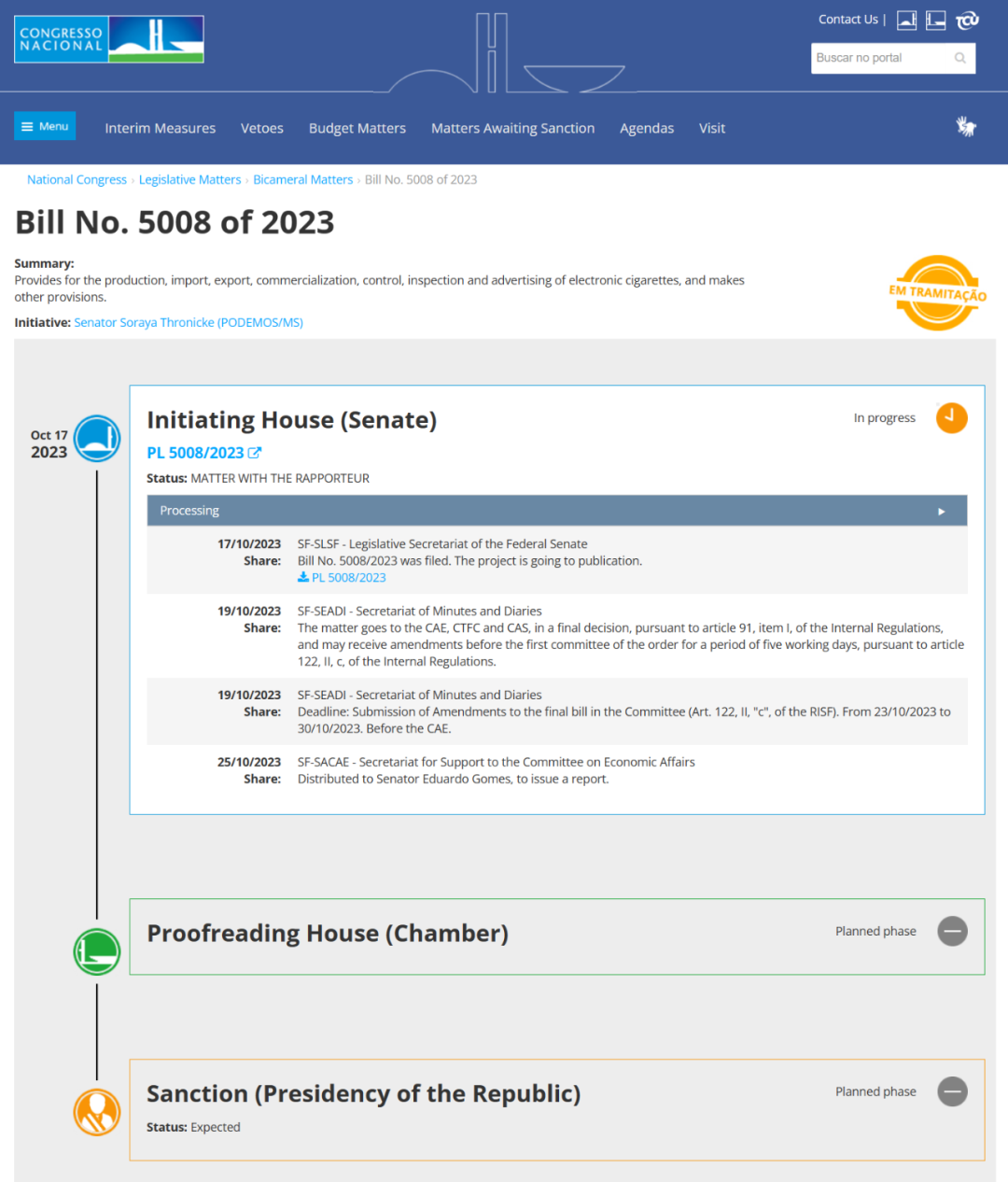
On October 17, 2023, Brazilian Senator Soraya Thronicke drafted a draft decree on regulations on the manufacturing, import, export, sales, control, supervision and advertising of e-cigarette products. Bill No. 5008 of 2023 Provisions for the production, import, export, marketing, control, supervision and advertising of electronic cigarettes, and make other provisions. The draft decree is currently under discussion in the Economic Affairs Committee of the Brazilian Congress.
Some of the requirements of the draft decree are as follows:
1. Registration requirements
1. E-cigarette products (including nicotine and non-nicotine) marketed in Brazil must be registered with the Brazilian National Health Supervision Agency (Agência Nacional de Vigilância Sanitária,Anvisa). The fee for each registration is one hundred thousand reais (R$100,000.00(onehundredthousand)reais). A toxicity risk assessment report of the product must be submitted at the time of registration.
2. In accordance with appropriate regulations, the National Institute of Metrology, Quality and Technology (Inmetro) determines non-hygienic operating standards for e-cigarettes, such as charging safety and battery specifications. For quality control purposes, products must be registered with Inmetro.
3. In accordance with appropriate regulations, the National Telecommunications Administration (Anatel) determines non-hygienic operating standards for e-cigarettes, such as Bluetooth technology or other similar wireless technology. If the product uses wireless technology, it must be registered with Anatel.
2. Product requirements
1.& nbsp; Only closed e-cigarette products are allowed to be sold (e-cigarette products that cannot be refilled and are not open).
2. The volume of tobacco oil should not exceed 22ml, and the nicotine concentration should not exceed 35mg/ml.
3. Additives in tobacco oil must be food and pharmaceutical grade high-purity substances. Substances such as vitamins, caffeine, taurine, colorants, vitamin E acetate, mineral oil, vegetable oil, and animal oil are prohibited.
4. Products must have child-resistant and tamper-resistant functions.
The product requirements apply to nicotine-containing and non-nicotine-containing e-cigarette products (except nicotine concentration).
3. Packaging and instructions requirements
1. The outer packaging of the product must contain the following information:
(a) List the ingredients contained in tobacco oil by type of additive;
(b) Clear and easy-to-understand identification of nicotine concentration;
(c) Batch number, production date and shelf life;
(d) Clear instructions to place it out of reach of children or adolescents;
(e) A health warning, for e-cigarettes containing nicotine, covers 20% of the largest main display area of the outer package, and the content is: Esteprodutocontémnicotinaqueéumasubstânciaquecausadependência. Nãoérecomendadooconsumpoornãofumantes.
(This product contains nicotine, a substance that can lead to addiction. Not recommended for non-smokers.)
2. The product must be accompanied by a manual containing the following contents:
(a) Instructions for use and storage, including that the product is prohibited for children under the age of 18 and is not recommended for non-smokers;
(b) Recommendations not to expose the product to pets;
(c) Contraindications;
(d) Warnings for specific risk groups such as pregnant women, people with diabetes and heart disease;
(e) Possible adverse effects;
(f) Addiction and toxicity;
(g) Contact information of the manufacturer or importer, including CNPJ and synthetic address (incluindoCNPJeendereçosintético, paraofabricanteou Importador.).
Regarding packaging and instructions requirements, the draft decree specifically mentions that it cannot contain descriptive words, patterns and logos about desserts and candies that appeal to children and young people.
Background: Anvisa issued a resolution on 2009.08.28 (Prohibitssale, import, and advertising for any kind of electronic smoking devices, knownaselectronic cigarettes-RDC Resolution No. 46 of August 28,2009.), On 2022.07.06, it was decided to continue to maintain this ban.
Link to official public information: www.congressonacional.leg.br/materias/materias-bicamerais/-/ver/pl-5008-2023
 WeChat


 Submission Successful
 WeChat Official Account