Xuntong specializes in testing services for electrical accessories, consumer electronics, lighting, wireless, toys and other products.

Service Hotline:18617145297 Official WeChat ZH EN
Current Location : 首页 > News > Regulations & Standards > Toy Safety Directive (2009/48/EC)

News

  • Latest News
  • Popular News

Contact Us +

Service Hotline 18617145297
Xuntong Standard
Authenticity Query Email:verification@nbxt-cert.com
Complaint Handling Email:customer.complaint@nbxt-cert.com
No.166 Jinghua Road, Block 037, Suite 101-106 & 202-206, High-tech Zone, Ningbo, China

Toy Safety Directive (2009/48/EC)

2026-07-22
225 Author:Xuntong Standard
Article Keywords:

introduced

The Toy Safety Directive has two main goals: first, to ensure the safety of toys used by children; and second, to ensure the smooth operation of the internal toy market.

The official name of the Directive is: Directive 2009/48/EC of the European Parliament and of the Council of June 18, 2009 on toy safety.
The directive was issued on June 18, 2009 and came into effect on July 20, 2009. EU member states must adopt and publish national laws and regulations before June 29, 2008 to translate the provisions of the new directive into national laws.
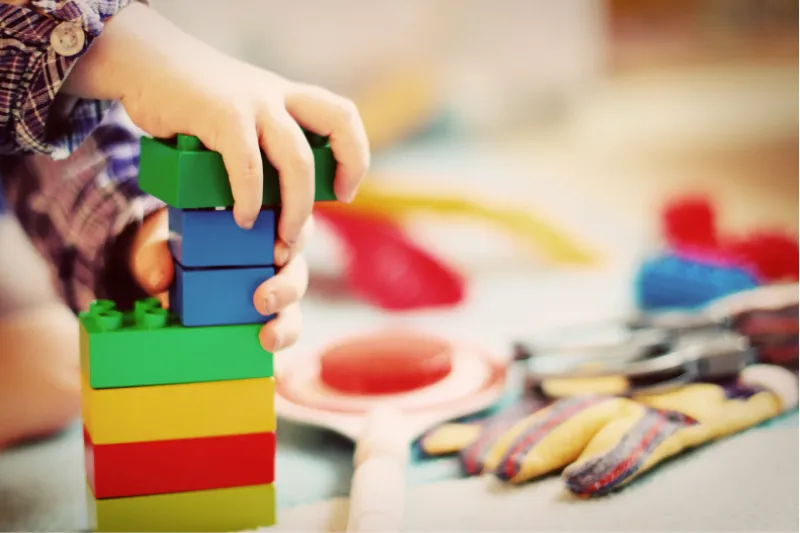
玩具安全指令 (2009/48/EC)Illustration

What products are covered by the Toy Safety Directive?

This Directive applies to products that are designed or intended to be played by children under the age of 14 (whether or not they are specifically intended for play by children under the age of 14)(referred to as “toys”). To determine whether a product falls within the scope of the Directive, the following criteria are provided:

Any product or material designed or intended (whether specifically or not) for play by children under the age of 14.

The term “exclusive or not” means that the product does not have to be specifically used for play purposes to be considered a toy, but it can also have other functions. For example, a key ring with a teddy bear attached is considered a sleeping bag in the shape of a toy or a soft stuffed toy.

Which products are not subject to this directive?

This directive does not apply to the following toys:

  • Playground equipment for public use;
  • Automatic game machines for public use, whether or not coin-operated;
  • Toy vehicles equipped with internal combustion engines;
  • Toy steam engines; and
  • Slings and catapults.

The following products mentioned in Annex I to the Directive are explicitly excluded from its scope:

  1. Decorative items for festivals and celebrations
  2. Products for collectors, provided that the product or its packaging has a clear and clear logo indicating that the product is suitable for collectors aged 14 and above. Examples of this category are:
    • Detailed and faithful scale model
    • Kit for assembling detailed scale models
    • Folk dolls and decorative dolls and other similar items
    • Historical toy replica
    • A replica of a real gun
  3. Sports equipment suitable for children weighing more than 20 kilograms, including roller skates, in-line roller skates and skateboards
  4. Bicycles with a maximum saddle height of more than 435 mm, measured as the vertical distance from the ground to the top of the seat surface, with the seat in a horizontal position and the seat pillars set at the minimum insertion mark
  5. Scooters and other vehicles designed specifically for sports or used for travel on public roads or public corridors
  6. Electric vehicles for driving on public roads, public corridors or their sidewalks
  7. Water equipment for deep water and children’s swimming learning equipment, such as swimming seats and swimming aids
  8. More than 500 pieces of puzzle
  9. Guns and pistols using compressed gas (except water guns and water pistols) and archery bows exceeding 120 cm in length
  10. Fireworks, including detonators not specially designed for toys
  11. Products and games that use pointed missiles, such as darts with metal pointed points
  12. Functional educational products, such as electric ovens, irons or other functional products with nominal voltages exceeding 24 volts, specifically used for teaching purposes under adult supervision
  13. Products used in schools and other teaching environments for educational purposes under the supervision of adult teachers, such as scientific equipment
  14. Electronic devices used to access interactive software and its associated peripherals, such as personal computers and game consoles, unless the electronic device or associated peripherals are specifically designed and targeted for children and have game value in their own right, such as a specially designed personal device computer, keyboard, joystick or steering wheel
  15. Interactive software for leisure and entertainment, e.g. computer games and storage media thereof, e.g. CDs
  16. Baby pacifier
  17. Lighting that attracts children
  18. Transformer for toys
  19. Children’s fashion accessories that are not for play.

How to comply with the Toy Safety Directive (2009/48/EC)?

Before putting toys on the market, manufacturers must use the following conformity assessment procedures:

1. Internal production control or CE marking self-certification: Manufacturers conduct their own conformity assessment and record the assessment results. (When the manufacturer adopts the unified standards published in the Official Journal of the European Union)
2. EC type inspection, in other words, toys must be submitted for third-party testing and certification under the following circumstances:
(a)There is no unified standard covering all relevant safety requirements for toys;
(b)The uniform standards mentioned in point (a) exist but have not yet been applied or only partially by manufacturers;
(c)(a) One or more of the uniform standards mentioned in the point have been issued with limitations;
(d)When the manufacturer believes that the nature, design, construction or use of the toy requires third-party verification.