-
Xuntong specializes in testing services for electrical accessories, consumer electronics, lighting, wireless, toys and other products.



 Service Hotline 18617145297
GB/T 36276-2023 stipulates the requirements for appearance, size and quality, electrical properties, environmental adaptability, durability, safety performance and other requirements for lithium ion batteries for power energy storage, describes the corresponding test methods, and specifies coding, normal working environment, inspection rules, signs, packaging, transportation and storage. GB/T 36276-2023 “Lithium-ion batteries for power energy storage” standard With the rapid development of my country’s new energy vehicles and renewable energy industries, lithium-ion batteries for power energy storage are becoming more and more widely used. In order to standardize and guide the production and use of lithium-ion batteries for power energy storage, my country has issued the GB/T 36276-2023 “Lithium-ion batteries for power energy storage” standard.
01. Change in scope of application
test object
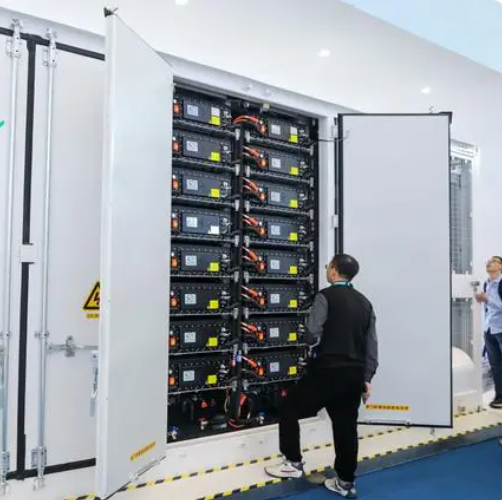
The new standard applies to lithium-ion batteries for power energy storage, including battery cells, battery modules, and battery clusters. The main difference between this and the old standard is that the new standard clearly includes battery clusters in its scope of application and is more comprehensive.
02. battery cell
The new standard defines a battery cell as “the basic unit that realizes the mutual conversion of chemical energy and electrical energy. It consists of a positive electrode, a negative electrode, a separator, an electrolyte, a shell and a terminal, etc. This is basically consistent with the definition of the old standard, but it is more concise and clear.
03. battery module
The new standard defines a battery module as “a battery assembly consisting of battery cells connected in series, parallel or series-parallel and having only one pair of positive and negative output terminals. It should also include components such as an enclosure, management and protection devices, which is basically consistent with the definition of the old standard, but the new standard adds” a description of only one pair of positive and negative output terminals, which is more clear.”
04. battery clusters
The new standard defines a battery cluster as “a battery assembly in which battery modules are connected in series, parallel or series-parallel and can operate independently after being connected to energy storage converters and ancillary facilities. It should also include battery management systems, monitoring and Protection of circuits, electrical and communication interfaces and other components”, which is basically consistent with the definition of the old standard, but the new standard has added “a description of” independent operation after being connected to energy storage converters and ancillary facilities,”which makes it clearer.
Test standard: GB/T 36276-2023 “Lithium ion batteries for power storage”
Test samples: 33 battery cells, 11 battery modules, and 1 battery cluster
Battery cell and battery module cycle: 205 working days;
Battery cluster cycle: 20 working days (cycle excludes factory audit time)
Expiration date: Updated according to standards
Whether a factory audit is needed: Yes
Information required:
1. application form;
2. Battery and battery pack specifications, CDF safety critical parts list, battery pack circuit diagram and layout diagram, etc.;
3. Related certifications (such as applying for certification of battery modules and providing certification of battery cells)
4. Other information will be confirmed by the engineer based on the actual product after the case is opened
Certification and testing process: product certification application → data review → sending samples → sample testing, verification of data → laboratory drafts → draft drafts → no errors → factory inspection → factory review to complete certificate issuance
Precautions: It is recommended that the factory date of test samples be within 3 months before the start of the test
 WeChat


 Submission Successful
 WeChat Official Account