-
Xuntong specializes in testing services for electrical accessories, consumer electronics, lighting, wireless, toys and other products.



 Service Hotline 18617145297
On August 17, the EU Battery and Waste Battery Regulations (hereinafter referred to as the “New Battery Law”), which has been promulgated for 20 days, will officially come into effect.
Core requirements: Whoever produces will recycle, whoever imports will recycle.
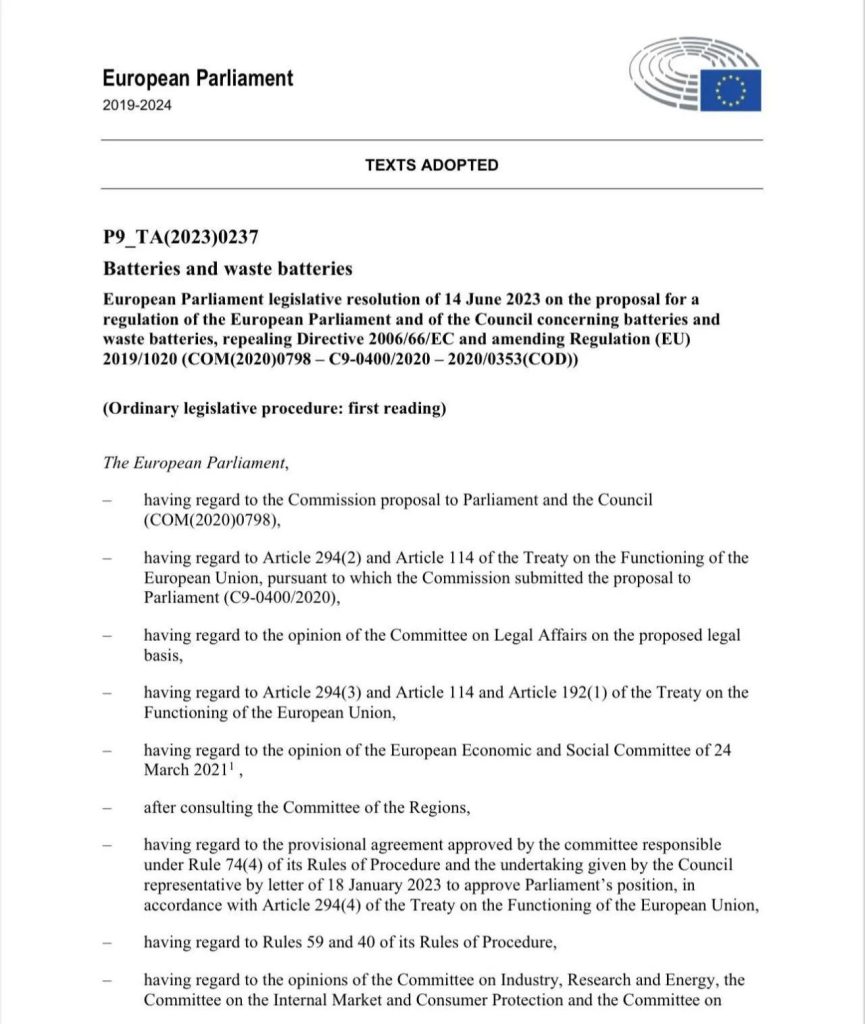
new regulatory requirements
The new battery law applies to all types of batteries, which are divided into five categories based on their designed use: portable batteries, LMT batteries (light means of transport batteries), SLI batteries (starting, lighting and ignition batteries), industrial batteries and electric vehicle batteries. In addition, battery cells/modules that are not assembled but are actually put into market use are also included in the scope of the bill.
The new battery law imposes mandatory requirements for all types of batteries (except batteries for military, aerospace, and nuclear energy purposes) placed on the EU market. These requirements cover sustainability and safety, labeling, information, due diligence, battery passports, used battery management and more. At the same time, the new Battery Law stipulates in detail the responsibilities and obligations of manufacturers, importers, and distributors of batteries and battery-containing products, and establishes compliance assessment procedures and market supervision requirements.
The main contents of the new battery law include:
Extended producer responsibility: The new battery law requires battery manufacturers to assume full battery life cycle responsibilities outside of the production stage, including recycling and disposal of waste batteries. Producers need to bear the costs of collecting, processing and recycling waste batteries and provide relevant information to users and processing operators.
Introduction of digital battery passports: For the provision of battery QR codes and digital passports, the new battery law introduces battery label and information disclosure requirements, as well as battery digital passports and QR codes. The information that needs to be disclosed includes the product’s capacity, performance, use, chemical composition, recyclable contents and other information. Starting from July 1, 2024, at least battery manufacturer information, battery model, raw materials (including renewable parts), total carbon footprint, battery carbon footprint for different life cycles, third-party certification reports, links to display carbon footprint, etc. Starting from 2026, all newly purchased electric vehicle batteries, light vehicle batteries and large industrial batteries, with a single battery exceeding 2KWh, must have a battery passport to enter the EU market.
Strengthen battery recycling management: The new Battery Law stipulates recycling standards and operating requirements for different types of waste batteries. Recycling goals are set to achieve certain recycling rates and material recycling goals within a specific time to reduce resource waste. New battery regulations clarify that
1.2025 Before December 31, 2014, recycling should at least achieve the following recycling efficiency targets: (a) 75% of lead-acid batteries are recycled by average weight;(b) 65% of lithium batteries are recycled by average weight;(c) 80% by average weight;(d) 50% by average weight.
2.2030 Before December 31, 2012, recycling should at least meet the following recycling efficiency targets: (a) 80% of lead-acid batteries are recycled by average weight;(b) 70% of lithium batteries are recycled by average weight.
Set the proportion of recycled materials: Pay attention to the supply risks of raw materials and ensure the supply safety of some raw materials by setting recycling targets.
In terms of material recycling goals, the new battery law clearly states that
By December 31, 2027, all recycling should meet at least the following material recovery targets: (a) 90% cobalt;(b) 90% copper;(c) 90% lead;(d) 50% lithium; and (e) 90% nickel.
2. By December 31, 2031, all recycling should meet at least the following material recovery targets: (a) 95% cobalt content;(b) 95% copper;(c) 95% lead content;(d) 80% lithium;(e) 95% nickel content.
Limit the content of harmful substances: Limit the content of harmful substances such as mercury, cadmium and lead in batteries to reduce their impact on the environment and health. For example, the new Battery Law clarifies that batteries must not contain more than 0.0005% mercury (expressed as mercury metal) by weight, whether used in electrical appliances, light transportation vehicles or other vehicles. The cadmium content of portable batteries shall not exceed 0.002% by weight (expressed as metallic cadmium). Starting from August 18, 2024, the lead content of portable batteries (whether or not installed in the device) must not exceed 0.01%(expressed as metallic lead), but until August 18, 2028, this limit will not apply to portable zinc-air button batteries.
Mandatory due diligence by operators: Manufacturers are required to conduct due diligence when purchasing raw materials to ensure that the materials used do not cause damage to the environment, human health and rights. Except for small and medium-sized enterprises with a net turnover of less than 40 million euros in the fiscal year.
Clarify implementation goals and timetables: The new battery law sets goals and deadlines for different stages to ensure that the battery industry gradually moves in a more sustainable and environmentally friendly direction. The carbon footprint requirements of the new battery law apply to electric vehicle batteries, light vehicle (LMT) and rechargeable industrial batteries, and there are different timetables based on battery types: starting from February 18, 2024, battery regulations will be enforced; Starting from February 18, 2025, the carbon footprint of electric vehicle batteries will be enforced; starting from February 18, 2026, the carbon footprint of rechargeable industrial batteries will be enforced; Starting from February 18, 2027, battery passports for rechargeable industrial batteries and electric vehicle batteries greater than 2kWh will be mandatory.
It is worth noting that the new battery law also mentions that starting from 2027, all portable batteries should adopt a detachable battery design, so that consumers can open the device by themselves without using special tools (such as solvents, heating) or undergoing training. Remove or replace the battery. All LMT batteries should be able to be easily removed and replaced by professionals.
In terms of information disclosure, the New Battery Law introduces a “battery passport”, requiring disclosure of information includes: battery manufacturer, carbon footprint, supply chain due diligence, battery materials and components, compliance certification, cycle performance, resource efficiency, durability, etc.
 WeChat


 Submission Successful
 WeChat Official Account