-
Xuntong specializes in testing services for electrical accessories, consumer electronics, lighting, wireless, toys and other products.



 Service Hotline 18617145297
EER refers to the energy efficiency ratio, which is a test that reflects the performance of lighting products in terms of service life, lumen maintenance, switching cycle, start-up time, color rendering index and power factor.
SASO, the competent authority of Saudi Arabia, has issued an official document stipulating that starting from May 1, 2017, lighting products that do not obtain SASO energy efficiency registration certificates will be prohibited from being imported into Saudi Arabia. All lighting products within the scope of supervision will be inspected by the customs for energy efficiency certification and qualified energy efficiency labels when they arrive at the customs. Lighting products without energy-saving certification or labeling will not be allowed to enter the Saudi Arabia market.
Currently, the EER certification standards required by the Saudi market are divided into three categories: SASO 2870:2018, SASO 2902:2018 and SASO 2927:2019. These three standards are all energy efficiency standards, but the scope of product control is different. SASO 2870 controls light sources, SASO 2902 controls lights, and SASO 2927 controls street lighting.
The product range controlled by SASO 2870: directional and non-directional incandescent light bulbs with luminous flux, self-ballasted compact fluorescent lamps, halogen light bulbs, LED light bulbs (incandescent light alternatives), LED light bulbs for general household or similar purposes (halogen alternatives) between 60 and 12,000 lumens. Saudi standard SASO-2870:2015 will be mandatory on May 1, 2016. On June 8, 2018, SASO issued Resolution No. 164, updating the energy efficiency label style of lighting products and revising it to SASO 2870:2018.
Product range controlled by SASO 2902: Similar products outside the scope of SASO 2870, i.e. similar products with a luminous flux greater than or equal to 12000 Lm, non-integrated compact fluorescent lamps, ordinary fluorescent lamps, high intensity discharge lamps, directional lamps, and non-directional integrated lamps, lamp controls (ballasts).
The product range controlled by SASO 2927: LED street lights, high-pressure discharge lights, street light control units. Products that originally belonged to the scope of SASO 2902 are now included in the scope of SASO 2927. Starting from February 15, 2020, the application standard for street lights will be changed to SASO 2927. Applied street lights need to be updated to SASO 2927, 2020 before June 1.
SASO 2870 and SASO 2902 already cover most lighting products, but there are still some products that can enjoy energy efficiency certification exemptions, mainly including solar street lights, traffic lights, emergency lights, LED display lights and other lights whose main purpose is not lighting.
EER certification includes two aspects: energy efficiency testing and energy efficiency registration. The 6000-hour service life test in the energy efficiency test requires a long test cycle. If 6000 hours of testing are completed, even day and night testing will take 250 days. Based on this consideration, the applicant can provide a test statement issued by a third-party institution recognized by Saudi Arabia, stating the expected completion time of this test, and ensuring to provide the test report to the Saudi party within 15 days after the test is completed. After the test is completed, Saudi Arabia will allow the EER registration certificate to be issued first.
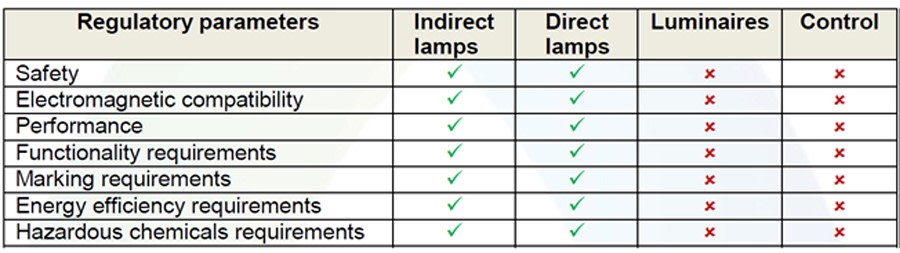
The testing and registration processes of the above three standards are basically the same, mainly because the testing data requirements under different control categories are different. Taking the SASO 2870:2018 standard as an example, taking the most common LED bulbs in daily life as a sample, SASO 2870:2018 covers the energy efficiency, functions, signs, hazardous chemicals and energy efficiency label requirements of all lighting products in the country. Its scope.
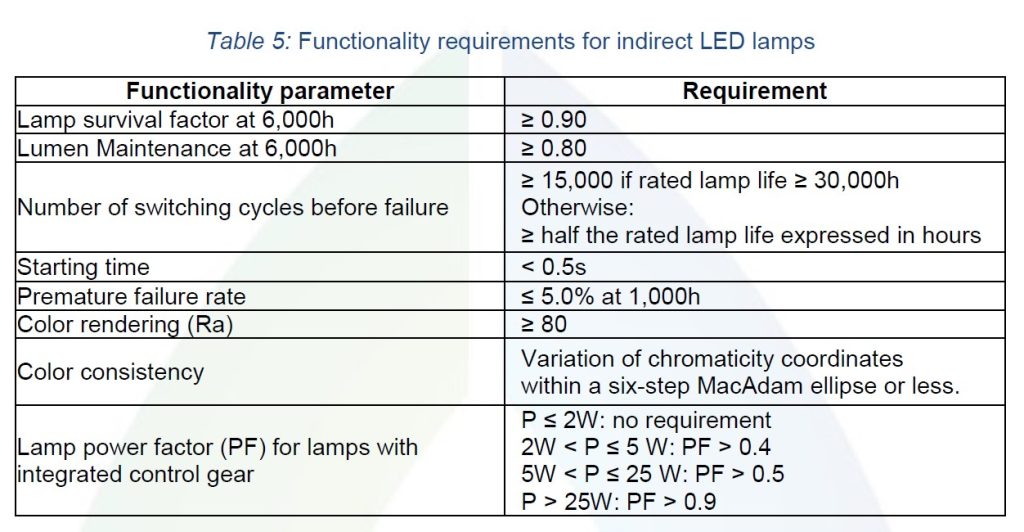
Ordinary LED bulbs have a generally luminous angle greater than 60 degrees and are indirect light sources. The main functional tests include product energy efficiency survival factor, optical flux maintenance rate, switching cycle, start-up time, premature failure rate, color rendering index, color consistency and power factor. In order to test the switch life of samples, the switch operation cycle should follow a 1 minute open and 3 minutes close cycle. Other tests such as working life, energy efficiency survival rate, premature failure rate, etc. should also follow the same switching cycle. Specific test standards are as follows.
For inspection of test sample markings, samples should be printed with information such as brand, rated power, input voltage and country of origin using non-removable ink. This information needs to be clearly marked in English (and/or Arabic) on the label, outer packaging, instruction manuals and website. In addition, the type of light source (indirect), lamp head, luminous flux, service life, color temperature, chemical content, etc. need to be clearly marked with words or graphic symbols.
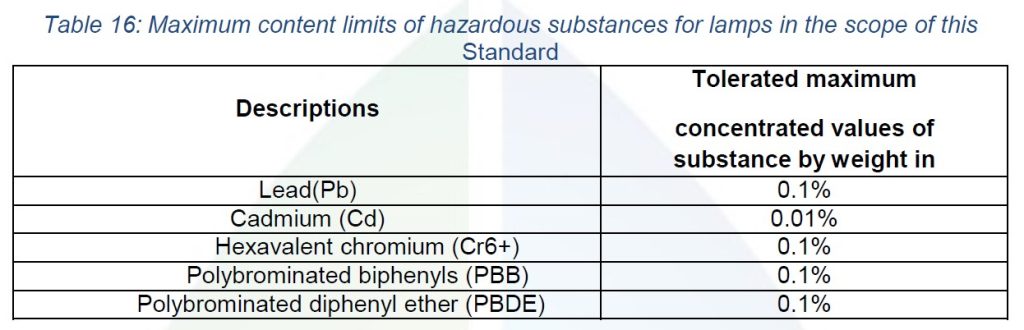
The SASO 2870 standard also requires testing for hazardous chemicals (RoHS) and contains substances such as lead (Pb), cadmium (Cd), hexavalent chromium (Cr6 +), polybrominated biphenyls (PBB), polybrominated diphenyl ethers (PBDE) and mercury, the following standards stipulate maximum content limits.
After the EER test is completed, a third-party organization needs to be entrusted to conduct EER registration and submit information review and registration, or the applicant can also apply for product registration on the official website.
Submission materials:
Applicant’s SASO account number and password
Energy Efficiency Test Report
RoHS Environmental Report
Label information, product packaging photos, logos
Basic information of the applicant (contact person, address, email address, telephone number, etc.)
Process:Fill in the application form → submit the report → receive the payment invoice →SASO review →EER label and certificate application was successful
Notes:
EER test report cycle: 7 working days
EER label registration cycle: 8-12 working days
Certificate validity period: 1 year (the specific date is marked on the certificate)
The test report for EER label registration must be within two years, otherwise it will be invalid
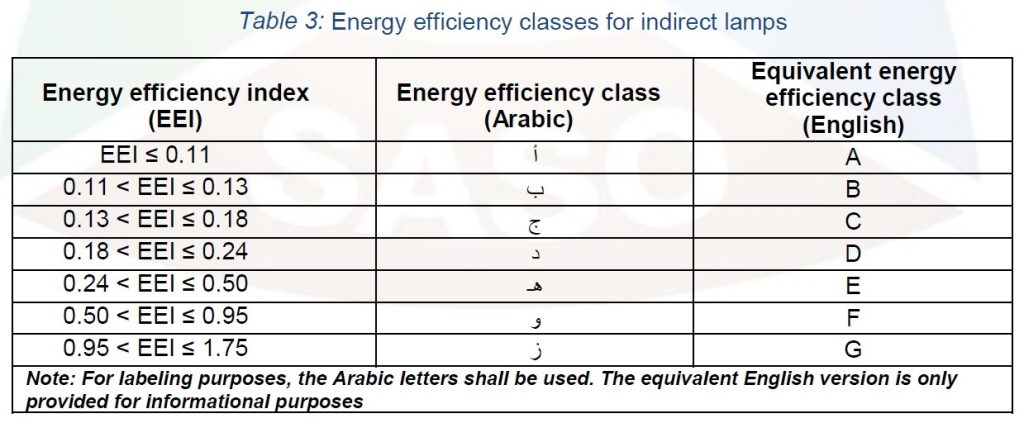
SASO2870 energy efficiency is divided into 7 levels, A, B, C, D, E, F and G. From A (highest efficiency) to G (lowest efficiency), different EEI (energy efficiency index) correspond to different levels of labeling. The EEI value is calculated using a special formula:
EEI = Pcor /Preference
After successful energy efficiency registration, the label will be automatically posted on the SASO website. SASO Resolution No. 164 issued on June 8, 2018 stipulates energy efficiency label styles. SASO2870 Energy Efficiency Label Requirements: Standard label printing size requires a width of 43mm and a height of 75 mm. If the label size reaches more than 70% of the maximum surface area, a modified label (43 mm wide and 45 mm high) can be used. The label is printed directly on the surface of the individual package, in a location clearly visible to consumers, and should be fixed and immovable. Consumers can scan the QR code to display the brand, model number, release date, license, etc.
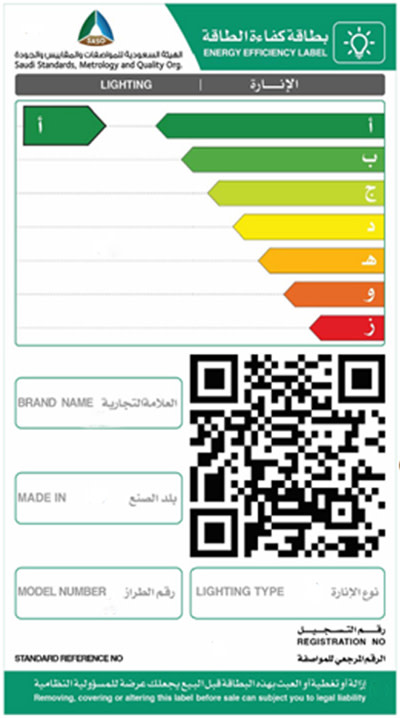
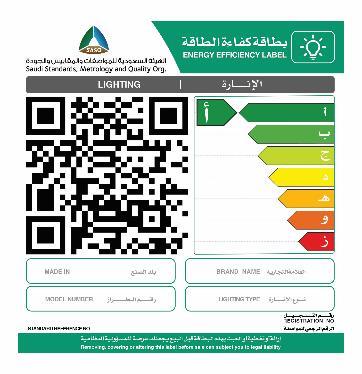
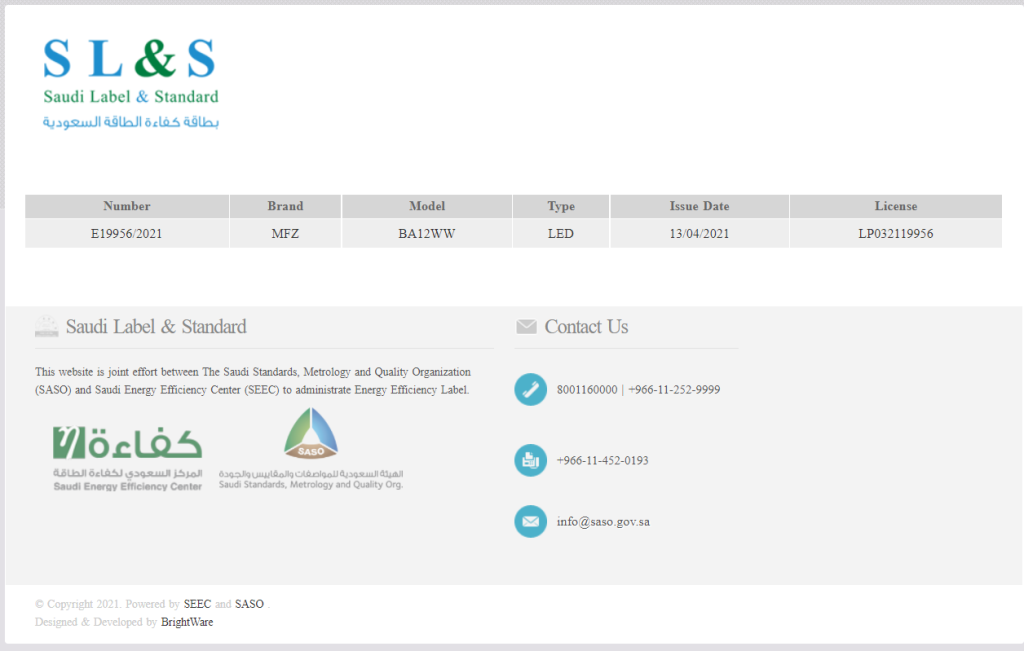
Currently, most lamps (except for lamps whose primary purpose is not lighting) must bear an EER certificate and label before being imported into Saudi Arabia. All lighting products within the scope of control will be inspected by Saudi import customs to see whether the lighting products have been EER certified and have qualified energy efficiency labels. Products that do not meet the requirements will be banned from customs clearance and will not be allowed to enter the Saudi local market. Therefore, Saudi buyers need to pay special attention to whether your imported goods have passed the EER test and have a qualified and visible EER label printed on the surface of the product packaging.
Although EER testing and registration are done by manufacturers, customers should also understand the testing and certification required for the products they import, as well as the associated certification process, which can help them better identify high-quality, compliant products from the manufacturer’s perspective.
 WeChat


 Submission Successful
 WeChat Official Account