-
Xuntong specializes in testing services for electrical accessories, consumer electronics, lighting, wireless, toys and other products.



 Service Hotline 18617145297
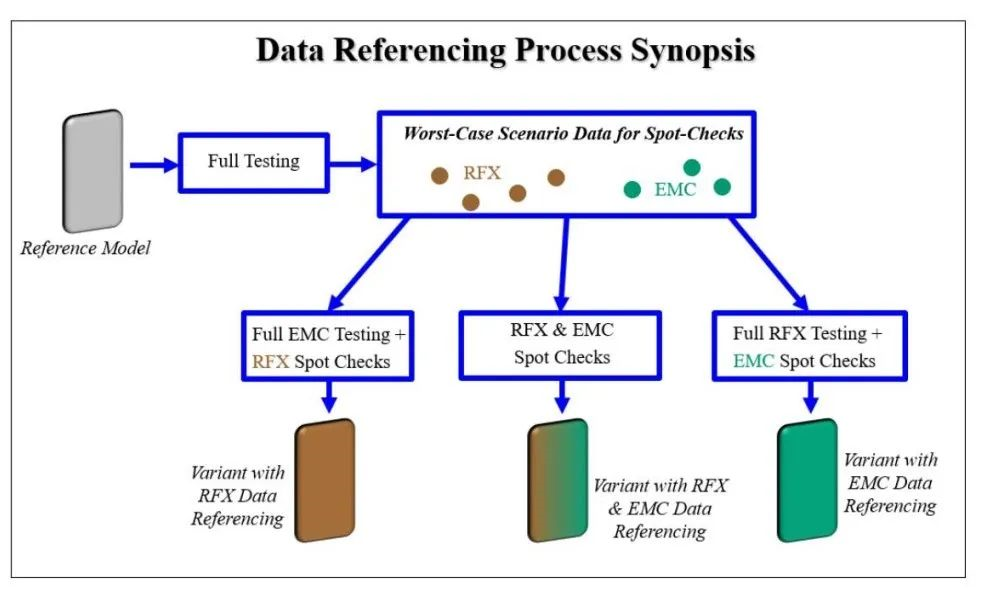
On October 23, 2023, the FCC in the United States issued a new requirement for data citation rules “KDB 484596D01 Referencing Test Data v02”. 484596D01 Referencing Test Data v02 replaces 484596D01 Referencing Test Data v01 and provides test data citation guidance that allows reference to test data from test reports submitted in relevant equipment authorization applications. For similar equipment with multiple models and differences, if EMC(RF) and radio frequency exposure assessment data are cited to reduce the test volume, they need to submit KDB inquiry consultation to obtain FCC authorization.
The update is as follows:
Update 1:
Introducing an extended clause for EMC and RF exposure data citations (incorporating previous guidance provided at TCBC workshops (October 2020 and April 2021)), Spot check data cannot compare to previous reference data by more than 25%.
Update 2:
Based on the ECR KDB query program provides new guidelines, submitted ECR KDB reference data queries should meet the following criteria
When using the ECR KDB inquiry, select “Equipment Conformity Review (ECR)” as the first category and select “Data Reference” as the second category. Selecting an incorrect category will require correction, delaying processing.
Only assignees/applicants of the same Grantee Code can submit data reference ECR. Applicants can also choose to have a testing laboratory, TCB or other authorized agent submit ECRs on their behalf. Test data can only be referenced in applications under the same Grantee code. The product selected must be certified by the same transferee or the ID change to the same Grantee must be submitted for the product in accordance with Section 2.933.
After receiving a positive response from the FCC to an ECR query (i.e., an FCC “acceptance”), applicants can contact TCB to provide all information (such as test data) required for a Form 731 application. This should be done for products (if not yet certified) and variant devices.
The FCC’s acceptance of the ECR does not represent an acceptance of the validity or accuracy of the data provided. This is just a technical proof that the variant device meets the data reference requirements.
A copy of the ECR KDB query (showing FCC acceptance) should be provided to TCB and uploaded with the Form 731 attachment as a supporting justification for the data reference process. If needed, ECR queries can be uploaded as long-term confidential exhibits. The TCB has the right to conduct a separate KDB investigation with the FCC to confirm the validity of the ECR or any statement therein.
Requests for other variants, or changes to FCC ID for reference models certified by different assignees, require a new, separate and complete ECR.
Update 3:
Added examples to illustrate possible scenarios
7.1. Multi-band Cellular Handset Multi-band Mobile Phone
Cellular phones (handsets) are certified to operate in multiple bands in licensed commercial mobile radio service bands, such as part22, part24, part25 and/or part27 below 3GHz. The reference device has been certified for all bands, and the variant device will use a reduced set of bands. The variant device has the same components as the reference device and implements reduced band operations through software.
In this case, a data reference process is not required because the testing on the reference device includes all bands, thus covering all possible use cases required for a compliance demonstration. All phones usually have the same FCC ID because the only difference is related to the software or firmware loaded.
If the reduced band functionality of a variant device is achieved by removing (i.e., removing) components from the reference device design, then the data reference process can be allowed for that variant device as long as component removal does not result in significant changes in the emission pattern compared to the reference device. It should also be considered that for the referenced RF exposure data, the most significant changes are usually those related to near field emission patterns, and these changes may be caused by minor modifications to PCB layout or component placement.
The Reference device and variant device may or may not be under the same FCC ID: This is a manufacturer’s choice/application that requires FCC approval as part of the stated acceptance of the ECR KDB investigation. However, according to Rule 2.907 (b) of the Rules, this does not affect the certification process).
7.2. DFS Data Referencing DFS Data Referencing
If the client device meets the requirements of KDB 905462, the DFS client device is allowed to reference DFS data.
For example, the DFS test reported by reference device included 30 tests per BW mode (20, 40, 80MHz) and per radar waveform. For approved variant devices (which may also have non-DFS related changes), the DFS spot check test report may include the widest BW mode (80 MHz) and 10 tests per radar waveform to demonstrate the required pass percentage for each waveform.
 WeChat


 Submission Successful
 WeChat Official Account