-
Xuntong specializes in testing services for electrical accessories, consumer electronics, lighting, wireless, toys and other products.



 Service Hotline 18617145297
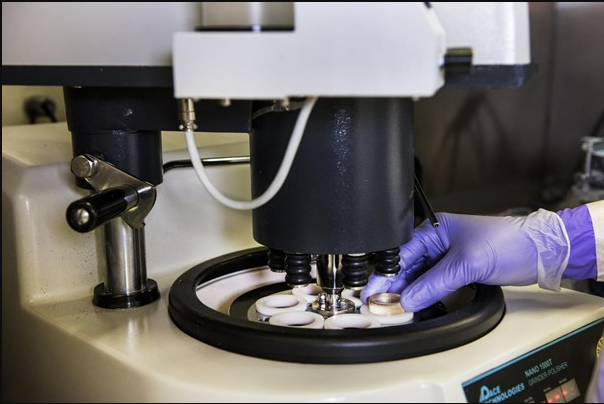
Material testing is the process of determining material characteristics. This can include physical characteristics, such as strength or elasticity, or chemical characteristics, such as reactivity or flammability. Material testing is important because it allows companies to determine whether a material is suitable for use in industrial manufacturing processes. In some cases, the material may not be suitable for use and must be replaced. In other cases, materials may need to be modified to meet industrial process requirements.
What is the purpose of material testing?
Material testing has several purposes. The most important purpose is to ensure the safety of those who use these materials. Material testing can also be used to determine the suitability of a material for specific industrial processes. In some cases, the material may not be suitable for use and must be replaced. In other cases, materials may need to be modified to meet industrial process requirements. Material testing also ensures that materials meet product specifications.
How many materials are tested?
Various types of material testing can be carried out according to the company’s needs. The most common types of material testing include mechanical testing, thermal testing, and chemical testing.
What is the most common mechanical testing method?
The most common mechanical testing methods include tensile testing, compression testing, and shear testing. These tests are used to determine the strength of the material.
What is thermal testing?
Thermal testing is used to determine thermal properties, such as its melting point or thermal conductivity.
What is chemical testing?
Chemical testing is used to determine chemical properties, such as their reactivity or flammability.
How to ensure that your material testing process is efficient and effective?
There are several things you can do to ensure your materials testing process is efficient and effective. The most important thing is to use industry-standard methods. You should also ensure that your test equipment is in good working order and that your test samples are ready. In addition, you should ensure that your personnel are properly trained in using test equipment.
Destructive material testing
Destructive material testing is a material test that involves the use of force to destroy or deform a test specimen. This type of test is often used to determine strength or flexibility. Destructive material testing can be performed on a variety of specimens, including metal specimens, plastic specimens, and composite specimens. Some of the most common types of destructive material testing include tensile testing, compression testing, hardness testing, and impact testing.
tensile test
Tensile testing is a destructive material test used to determine material strength. In this type of test, the specimen is pulled until it breaks. The test results can be used to determine the tensile strength of the material.
compression test
Compression testing is a destructive material test used to determine the compressive strength of a material. In this type of test, the specimen is compressed until it breaks. The test results can be used to determine the compressive strength of the material.
hardness test
Hardness testing is a destructive material test used to determine the hardness of a material. In this type of test, the specimen is loaded until it breaks. Test results can be used to determine the hardness of the material.
impact test
Impact testing is a destructive material test used to determine the impact strength of a material. In this type of test, the specimen is subjected to a sudden impact until it breaks. The test results can be used to determine the impact strength of the material.
Non-destructive material testing
NDT is a material test that does not involve the force to damage or deform the specimen. This type of test is often used to determine the mechanical properties of a material, the thermal properties of a material, or the chemical properties of a material. Some of the most common types of non-destructive material testing include visual testing, ultrasonic testing, radiographic testing, and magnetic particle testing.
visual inspection
Visual inspection is the most common type of non-destructive material testing. In this type of test, the inspector visually inspects the test sample for any defects. This type of inspection can be used to detect surface defects, subsurface defects, or internal defects.
magnetic particle testing
Magnetic particle testing is a non-destructive material testing that uses magnetic particles to detect defects in specimens. In this type of test, the inspector applies a magnetic field to the test specimen. The inspector then observes what happens when the magnetic particles flow around the defect. If any particles are attracted to the defect, there is a problem with the test sample.
ultrasonic testing
Ultrasonic testing is a non-destructive material testing that uses ultrasonic waves to detect defects in samples. In this type of test, an ultrasonic transmitter sends high-frequency sound waves through the surface of the test sample and into its interior. The ultrasonic waves then reflect off any defects in the test sample and are detected by the receiver. By analyzing the time it takes for sound waves to reach the receiver, inspectors can determine the location and size of any defects in the test sample.
Radiographic Testing
Radiographic testing is a non-destructive material testing that uses X-rays to detect defects in specimens. In this type of test, the inspector aims the X-ray beam at the test specimen. The X-rays pass through the surface layer of the specimen and enter its interior. The X-rays then reflect off any defects in the test sample and are detected by a detector. By analyzing the intensity of the reflected X-rays, inspectors can determine the location and size of any defects in the specimen.
In summary, the most effective material testing can be used in industrial manufacturing that uses destructive material testing; this is when the specimen fails or reaches its maximum strength. Test results are recorded as values that reveal information about the physical and mechanical properties of the material.
 WeChat


 Submission Successful
 WeChat Official Account