-
Xuntong specializes in testing services for electrical accessories, consumer electronics, lighting, wireless, toys and other products.



 Service Hotline 18617145297
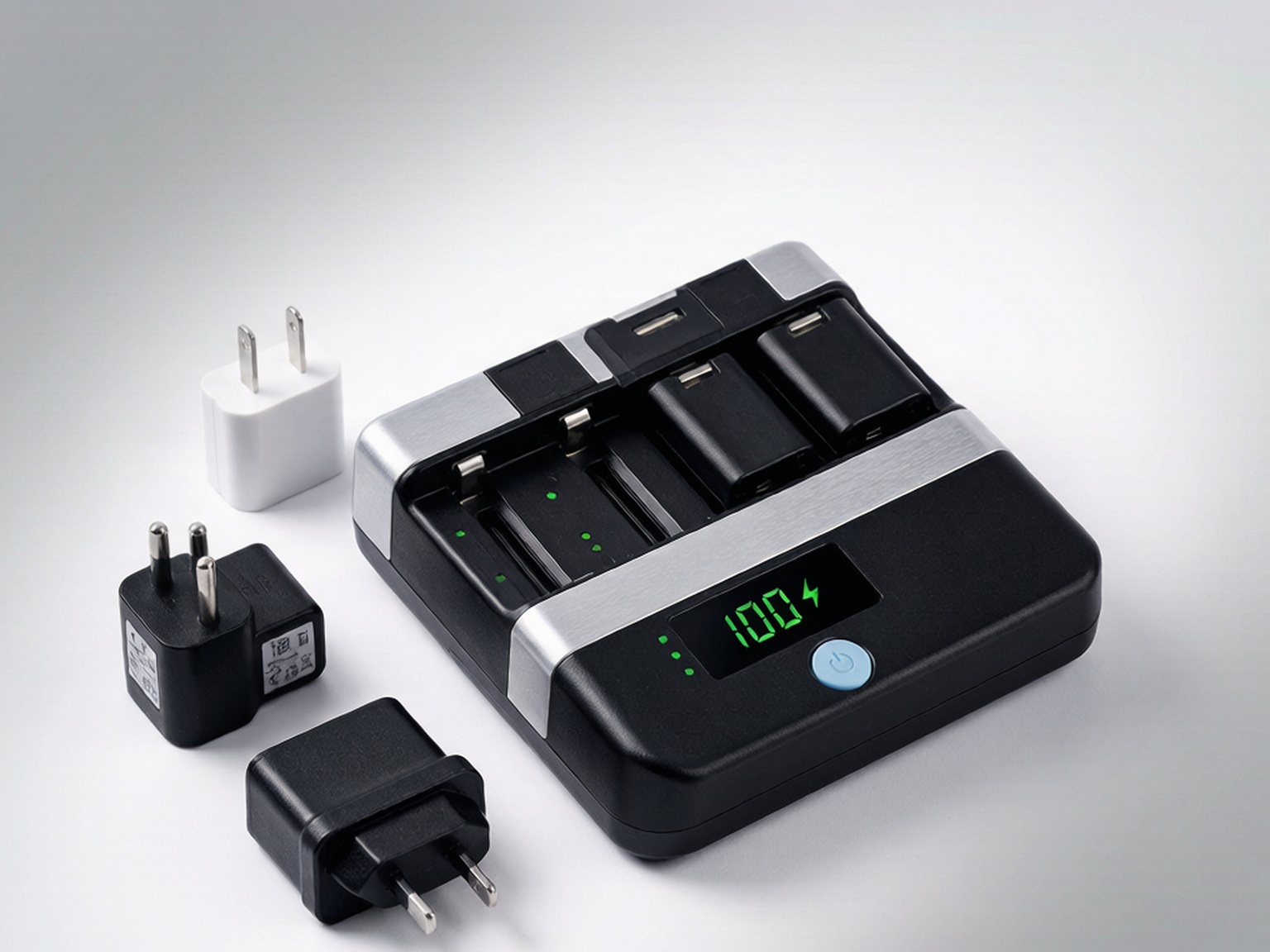
A battery charger is the critical interface between the mains supply and the battery; a safety failure can directly cause a fire or electric shock, which is why every country regulates it so strictly. In batch charger testing, Ningbo Xuntong Standard has found that non-conformities follow a highly predictable pattern, and that most of them originate from “protective features omitted to cut cost”. This article reviews the most frequent failure modes and sets out rectification measures.
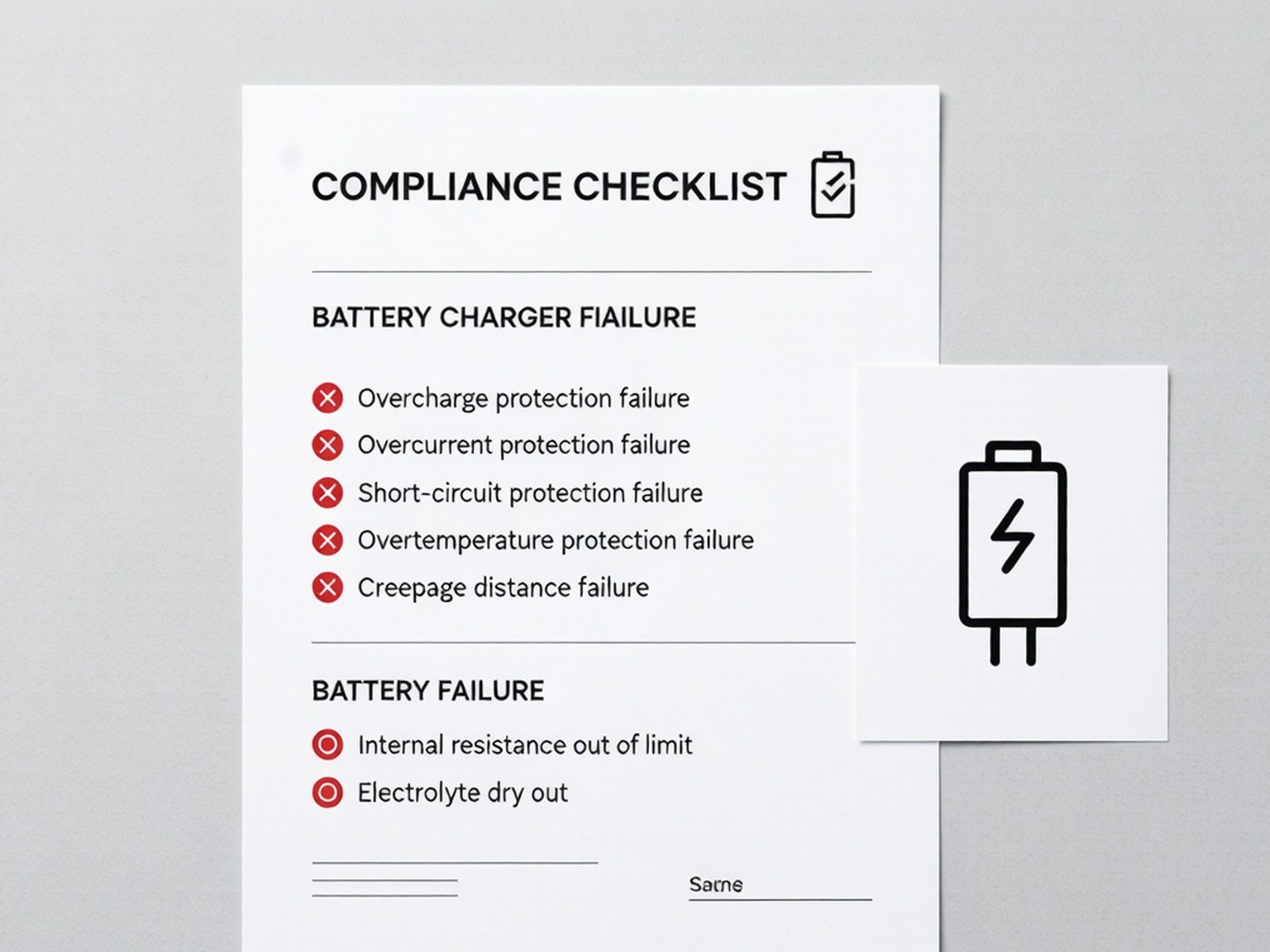
A charger must protect reliably under abnormalities such as output short-circuit, battery overcharge and reverse connection. The most common non-conformity is a lack of independent overcharge cutoff, or a protective device with only single redundancy. The rectification direction is a dual architecture of “control IC plus independent protection device”, together with failure-mode verification of the protective action, so as to minimise the chance of a latent fault.
The isolation distance between the primary (mains side) and secondary (output side) is central to judging a charger compliant. Ningbo Xuntong Standard advises manufacturers to reserve sufficient creepage distance for the highest working voltage, to use compliant barriers and triple-insulated wire (TIW) in the transformer, and to control incoming-material consistency during mass production, so as to avoid the familiar pattern of “design meets the standard, but production falls short”.
Under full-load and abnormal conditions, the temperature rise of the enclosure, transformer and rectifier devices must stay within the limits. Some designs raise power density for miniaturisation, pushing critical components close to their limits for prolonged periods and reducing both life and reliability. Rectification should apply derating in the design and complete the thermal protection, favouring a conservative thermal margin over an aggressive one.
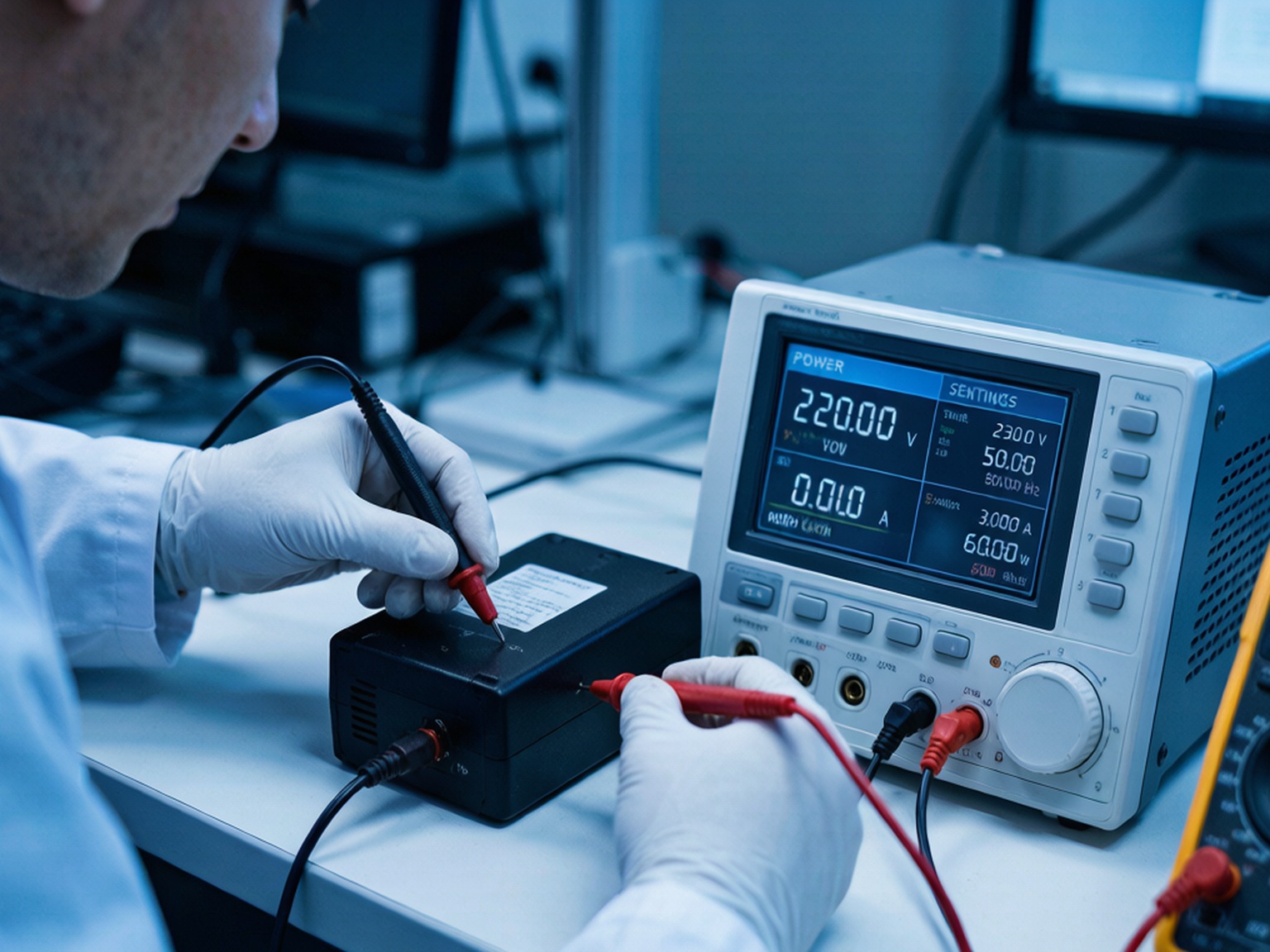
The inherent high-frequency interference of a switched-mode power supply must satisfy EMC emission and immunity requirements, whilst most markets also require standby power and energy-efficiency compliance. Rectification typically addresses the input filter, Y-capacitor layout and shielding, balancing size against compliance, and characterising the conducted behaviour thoroughly before sign-off.
Ningbo Xuntong Standard can provide charger pre-compliance testing, non-conformance diagnosis and rectification guidance under IEC 60335-2-29 / GB 4706.18 and the corresponding safety standards, covering overload, insulation, temperature rise and EMC in full, and can assist with CCC, CE, UL and PSE certification. For more standards interpretation, see the Regulations & Standards column; for our appliance-testing capability, see the Appliance Testing column; or visit the Ningbo Xuntong Standard website for our quotation guide. Finding the problem before mass production keeps the rectification cost at its lowest.
 WeChat


 Submission Successful
 WeChat Official Account