-
Xuntong specializes in testing services for electrical accessories, consumer electronics, lighting, wireless, toys and other products.



 Service Hotline 18617145297
When you search the Internet for “What certificates are needed when importing lighting products from China to Saudi Arabia for customs clearance,” you will see words such as EER, CB, IECEE, SABAR, and maybe PCOC, SCOC, etc. Wow, there is a lot of jargon and it seems a bit complicated. If you don’t want to study all these complex certifications but need to export to Saudi Arabia for trade, then this article will be useful to you.
Taking the latest policies as a source, let’s talk about the relationship between these certificates and systems in reverse. SABAR is a new online application system launched by SASO, a standards organization in Saudi Arabia, where you can apply for PCOC (Product Certificate of Conformity) and SCOC (Transport Certificate of Conformity) for customs clearance. The prerequisite for importers of lighting products to register with SABER is to provide relevant reports and certificates of IECEE certification, which is a new certification requirement mandatory by SASO for lighting products imported into Saudi Arabia since 2019. To apply for the IECEE certificate, you only need a CB certificate and an EER certificate (some products can be exempted). The CB certificate tests the safety performance of electrical products in accordance with IEC standards and is a mandatory certification of safety regulations. EER is mainly aimed at energy efficiency certification of lighting products.
Simply put, their relationship is EER+CB→IECEE→SABRE(PCOC, SCOC).
Now that you understand the relationship between them, what are the points worth noting when your supplier provides relevant certificates or you apply for it yourself on the system?
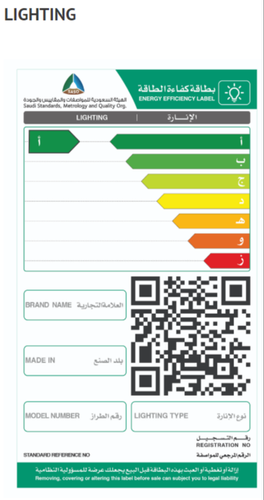
Compared with other products applying for IECEE certification, lighting products have one more EER certification step. EER refers to energy efficiency certification, including life, light flux maintenance rate, switching cycle, start-up time, color rendering index and power factor. Some products have been exempted, mainly solar street lights, traffic lights, emergency lights and LED display lights. The main purpose is not lighting. The EER mainly includes energy efficiency testing and energy efficiency registration, while the 6000-hour life test in the energy efficiency testing requires a long test cycle. Based on this consideration, exporters can provide testing statements issued by a third party agency recognized by Saudi Arabia,
Model samples, label information, packaging pictures, trademark information, manufacturer information.
1. EER test report cycle: 7 working days
2. EER registration cycle: 8-12 working days
3. Certificate validity period: one year (the specific date is marked on the certificate)
4. The test report for energy efficiency registration must be within two years
5. Different importers only need to issue a trademark authorization letter to register a new importer’s EER trademark using the original energy efficiency report.
CB test certificates are mutually recognized within IECEE (International Electrotechnical Commission Electrical Products Conformity Testing and Certification Organization, referred to as IECEE certificates, but are not identical) member states. The aim is to reduce barriers to international trade that arise from having to meet certification or approval standards in different countries. Since this CB report is subsequently used to apply for Saudi IECEE certification, the relevant test information on the products on the CB must meet the requirements of the Saudi Bureau of Standards. If the voltage and frequency are inconsistent with the voltage and frequency used locally, Saudi Arabia will need to conduct additional testing on the national difference item.
Model parameter table, model sample (high power is preferred when the structure is the same), driver, component list, schematic diagram, PCB (circuit board), transformer information.
1. Application cycle: About 1 month
2. Validity period: three years. In practice, the standard update time shall prevail. Once the standards are updated, the certifications are also updated
3. The information content on the CB certificate must be correct and is the basis of other certificates such as IECEE.
The IECEE certification is a new certification implemented by SASO in early 2018 to ensure that standards, quality guidelines and consistency assessment systems issued by Saudi Arabia comply with international guidelines and WTO requirements. If nine categories of goods including lighting products covered by the certification enter the Saudi market, they need to apply in advance and obtain an IECEE certificate so that the goods can be cleared in Saudi Arabia. Certification is implemented in stages.
Phase 1: February 2018
Mobile phones; mobile phone chargers and accessories; batteries (mobile phones, vehicles)
Phase 2: August 2018
Water pump; motor; dishwasher; portable computer; television equipment
Phase 3:2019
Lighting equipment (including lamps)
1. Saudi Standard CB Certificate and Report
2. Energy efficiency ratio certificate
3. Importers and manufacturers Business licenses Production licenses
4. Importers and manufacturers ‘declarations
5. Product photos, packaging printouts, product physical photos
6. Description, PID (indicating the difference in model name and brand name between the certified model and the CB test model)
1. Application cycle: 15 to 20 working days.
2. Validity period: 1 year.
3. If the EER certification is valid for less than two months, it cannot be uploaded. It is necessary to ensure that the customer does not expire when receiving it.
4. The importer system account information must correspond to the latest business license
5. The parameters on the package must be consistent with the parameters of the corresponding model in the CB
6. For some products with pins, a report on the corresponding pins needs to be provided, and for some products, a letter of commitment needs to be provided.
7. An IECEE certificate can contain multiple models on the same CB certificate.
The Saudi Product Safety Plan (SALEEMS) was launched on January 1, 2018. The new online application system “SABER” for PCPC (Product Certificate of Conformity) and SCOC (Bulk Cargo Certificate of Conformity) will be launched soon. Starting from January 1, 2019, it will gradually replace the old SASO-COC certification. After the IECEE certificate operation is completed, you can log in to the saber.sa website to start the importer registration process.
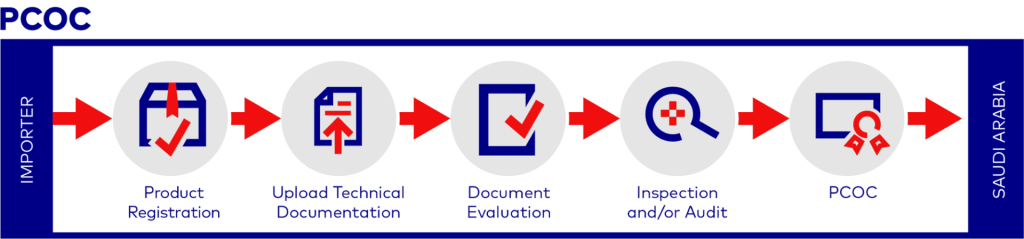
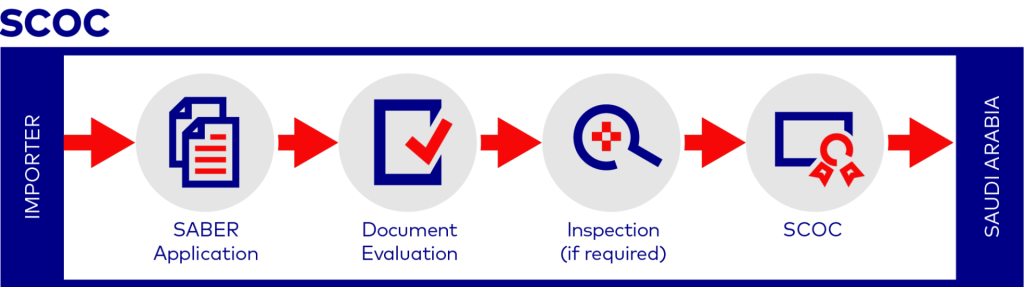
Importers need to enter relevant application information in the system → select a licensing authority in the system → pay the PCOC certificate fee → wait for the licensing authority to contact them and provide the required certification documents → wait for the documents to be reviewed and submitted to the SABER licensing authority system → Get PCOC certificate
After obtaining the PC certificate, you can continue to submit the SCOC certificate application to the SABER system and issue invoices, packing lists, bills of lading and other shipping documents. During this period, the issuing agency will check the validity of the PCOC certificate and issue the SCOC certificate.
1.PCOC is valid for 1 year
2. The SCOC certificate is only valid for this batch of imported goods
3. SABRE system requires Saudi buyers or local merchants to register online
The entire certification process must be completed for all products in the lighting product categories under SASO2870:2018 and SASO2902:2018. The SABRE system was initially implemented only for products under the control of the system. In 2020, SASO-COC was abolished, allowing almost all products exported to Saudi Arabia to be included in the SABRE certification system. Products not included in the list can also apply for SABRE-SCOC certificates on the SABAR system. The following categories are briefly introduced.
Category 1: SABRE system control. Use test reports in SABER (IEC, GCC, SASO, etc.) to apply for PCOC certification and SCOC certification
Category 2: Lighting products. EER Test +EER Registration +CB Report +CB Certificate +IECEE Certification Apply for SCOC Certification at SABER
Category 3:14 categories of electrical and electronic products. Use CB to apply for IECEE, and then go through the SABRE process.
Category 4: food, drugs, cosmetics, medical devices. Apply for SFDA and then go through the SABER process.
Category 5: Energy efficiency products. Create the EER and then go through the SABRE process.
Category 6: Ceramics and sanitary ware. Apply for water efficiency and complete the SABER process.
Category 7: Auto parts, toys, low-voltage electrical products. Apply for GCC certification and then go through the SABER process.
Class 8: Non-regulated products. Go through the SABER process, and then provide self-declaration certificates and SCOC certificates for customs clearance.
In recent years, the Saudi Arabia market has been changing. Both exporters and importers need to pay timely attention to relevant certification information to ensure smooth customs clearance of goods.
 WeChat


 Submission Successful
 WeChat Official Account