-
Xuntong specializes in testing services for electrical accessories, consumer electronics, lighting, wireless, toys and other products.



 Service Hotline 18617145297
1. Background introduction
With product innovation and upgrading, reliability requirements are becoming higher and higher. Vibration testing is one of the important testing methods to verify and improve product reliability. If a product or industry is mature and has strong enough influence, you can often choose GB, ISO, IEC, ASTM or QB (Enterprise Standards), and you can easily obtain a testing plan and conditions. However, for many electronic products that are only preliminary development, or For electronic products with insufficient industry influence, there are no fixed industry standards or enterprise standards to follow. How to choose the vibration test conditions for these products? This has gradually become a doubt and difficulty for many customers.
2. Classification of vibration tests
Vibration test is mainly divided into sinusoidal vibration and random vibration.
Sinusoidal vibration is a test method often used in testing. It mainly simulates the vibration generated by rotation, pulsation, vibration (in ships, aircraft, vehicles, spacecraft), as well as product structural resonance frequency analysis and resonance point residence verification. It is divided into two types: swept frequency vibration and fixed frequency vibration. Its severity depends on the frequency range, amplitude, and test duration, and is generally suitable for the initial analysis stage of the product.
Random vibration, in most cases, represents the actual environment. It is a test conducted on a vibrating object or model to evaluate the anti-earthquake ability of a product in the expected use environment. It simulates the various vibrations encountered by the product in the transportation, installation and use environment. Vibration is used to determine whether the product can withstand various environmental vibrations. Its severity depends on the frequency range, GRMS value, and test duration, and is generally applicable to the final inspection of the product.
This article focuses on: GB 2423.10-2019 (IEC 60068-2-6) Environmental testing Part 2: Test methods Test Fc vibration (sinusoidal) and GB 2423.56-2018(IEC 60068-2-64) Environmental testing for electric and electronic products Part 2: Test methods Test Fh: Broadband random vibration (digital control) and guidance, the selection of test conditions in these two main standards.
3. Selection of vibration test conditions
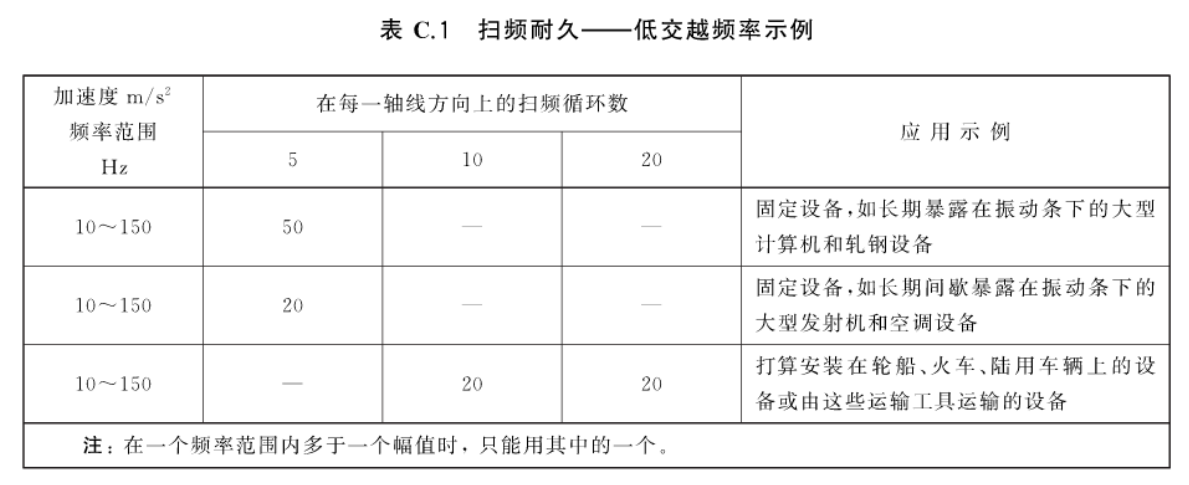
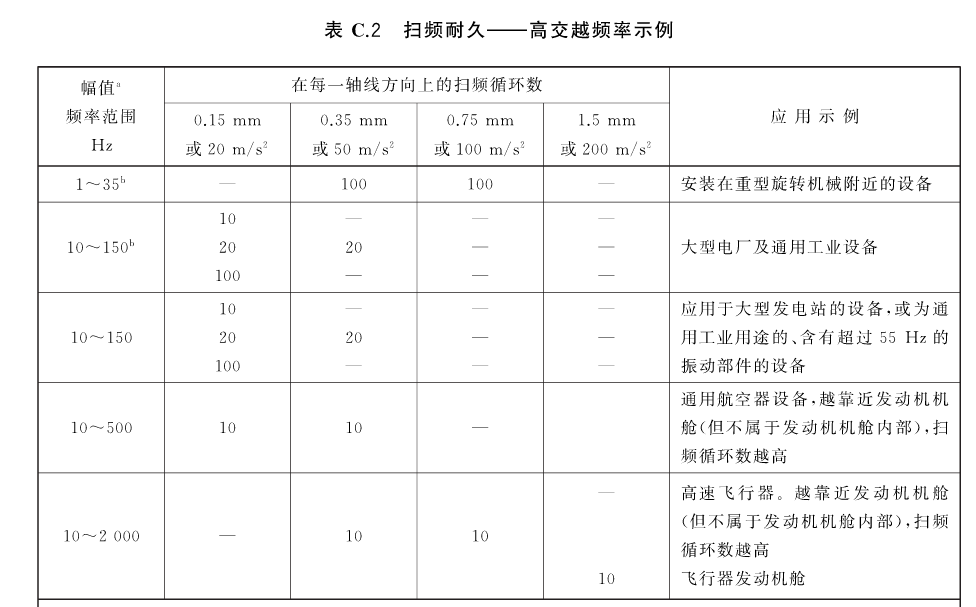
Vibration type: Sinusoidal vibration
Citing standard: GB 2423.10-2019 (IEC 60068-2-6) Environmental testing Part 2: Test methods Test Fc vibration (sinusoidal)
Vibration conditions:
Vibration type: Random vibration
Citing standard: GB 2423.56-2018(IEC 60068-2-64) Environmental testing for electric and electronic products Part 2: Test methods Test Fh: Broadband random vibration (digital control) and guidelines
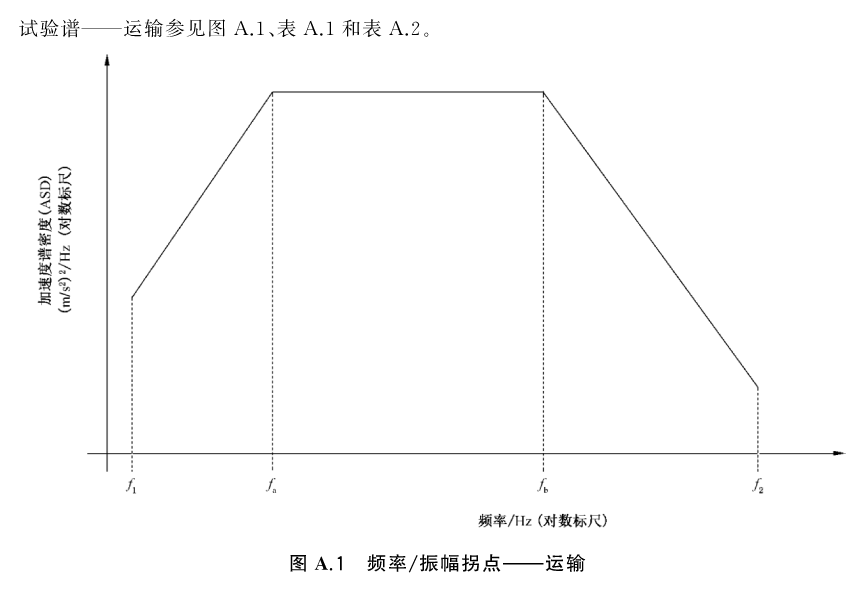
Vibration conditions: There are four test spectra: Spectrum A.1 Transport, Spectrum A.2 Fixed installation, Spectrum A.3 Equipment installed on wheeled vehicles, Spectrum A.4 Equipment installed on aircraft and helicopters
Spectrum A.1 Transport-Figure A.1
Spectrum A.1 Transport-Table A.1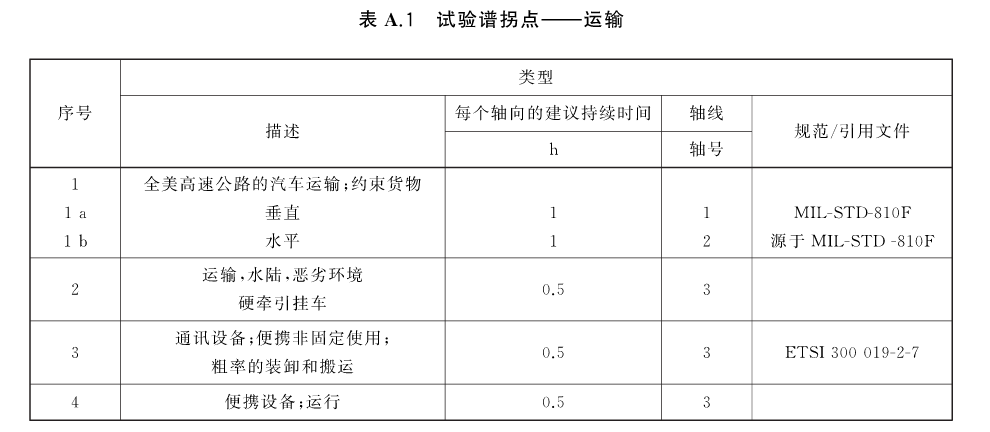
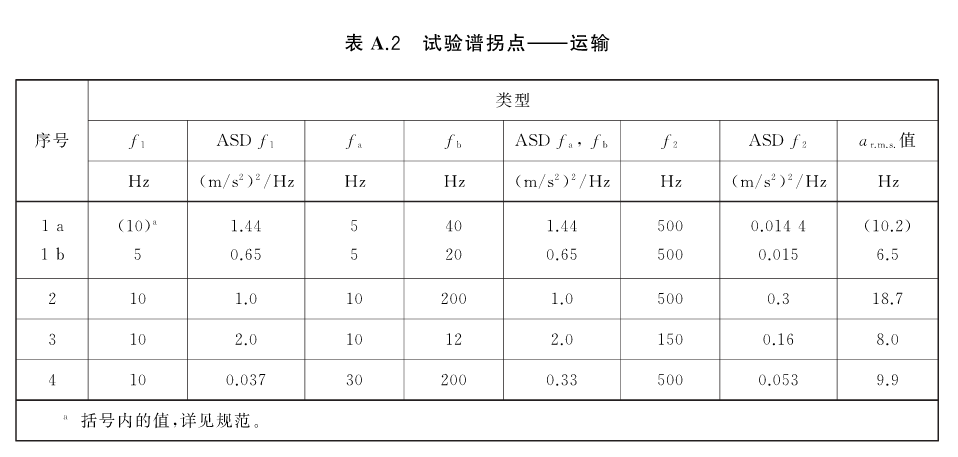
Spectrum A.1 Transport-Table A.2
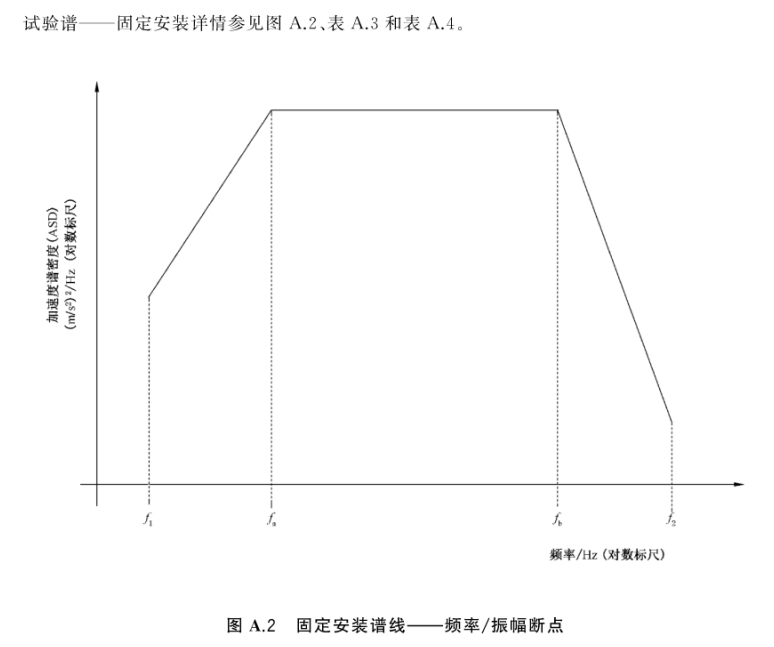
Spectrum A.2 Fixed installation-Figure A.2
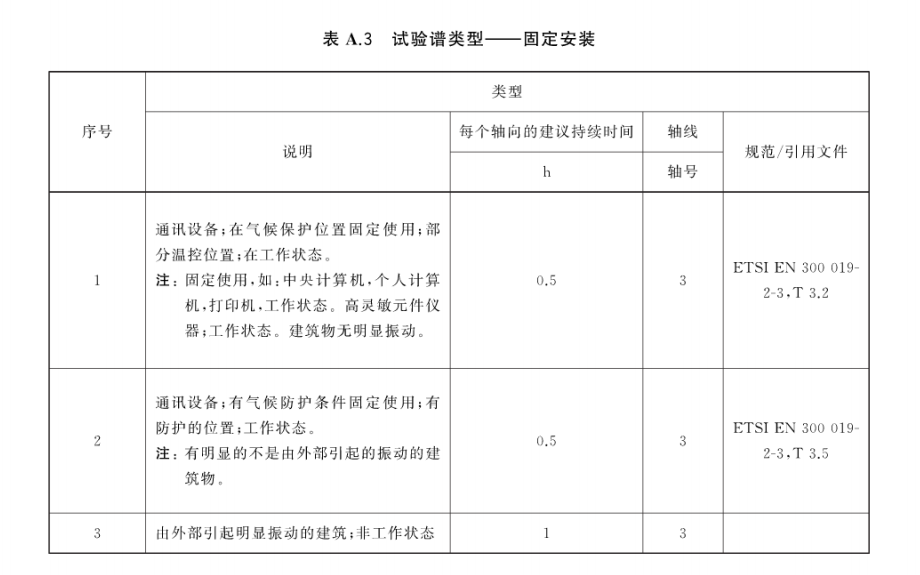
Spectrum A.2 Fixed installation-Table A.3
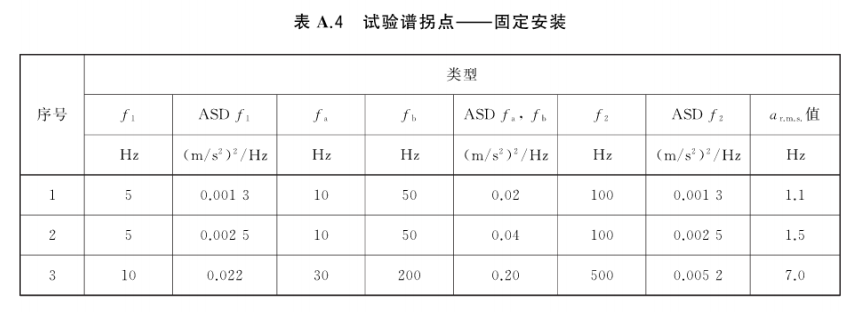
Spectrum A.2 Fixed installation-Table A.4
Spectrum A.3 Equipment installed on wheeled vehicles-Figure A.3
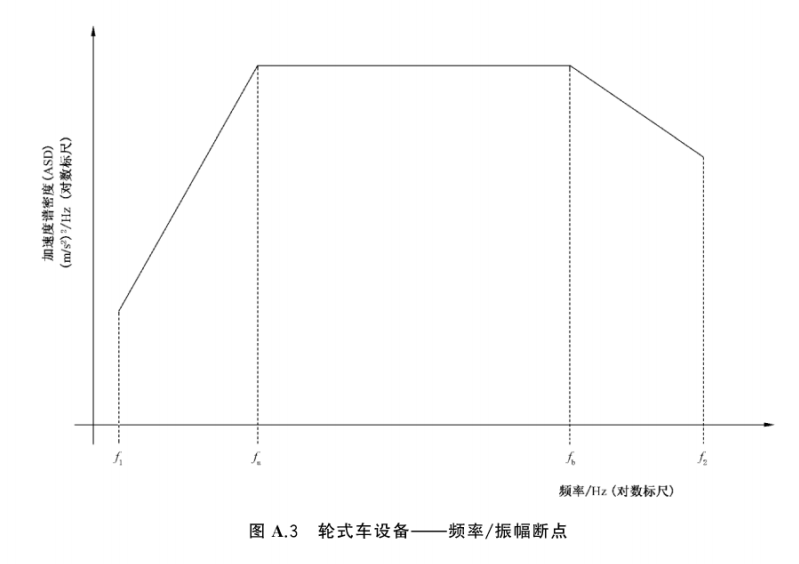
Spectrum A.3 Equipment mounted on wheeled vehicles-Table A.5
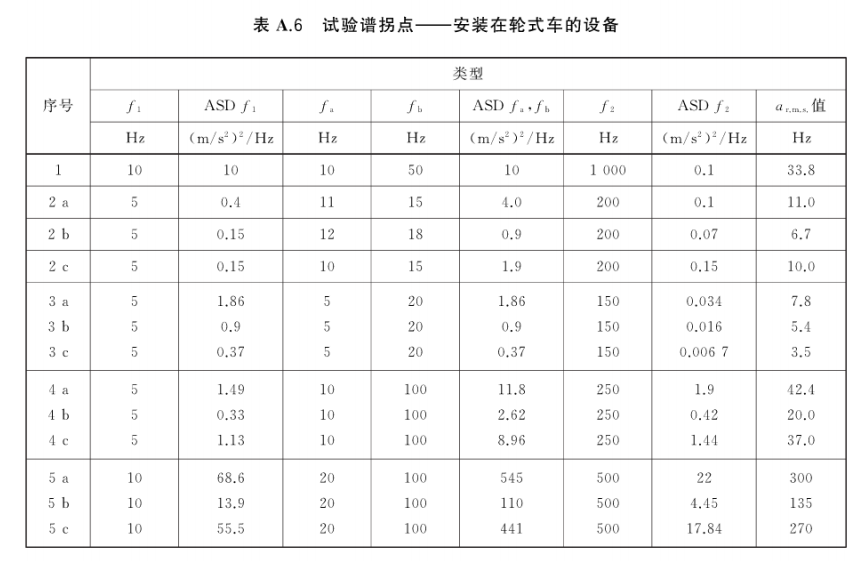
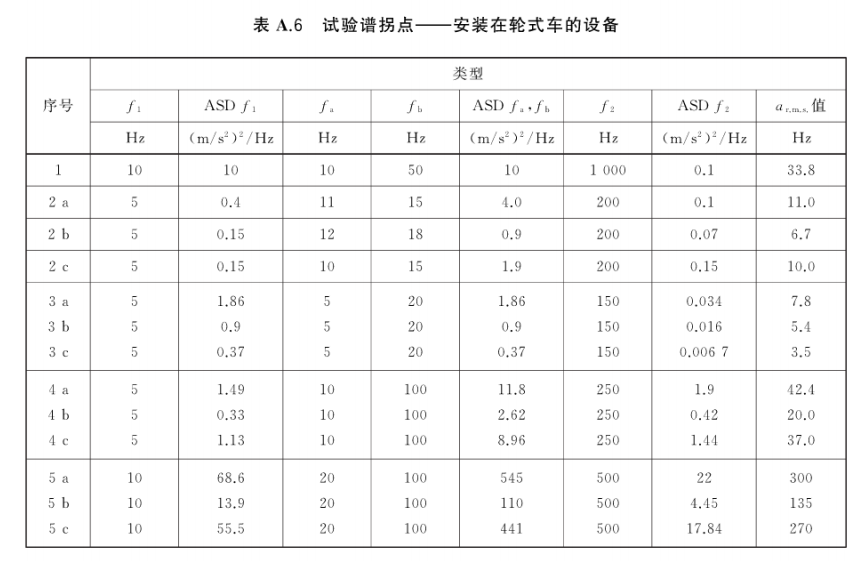
Spectrum A.3 Equipment mounted on wheeled vehicles-Table A.6
Spectrum A.4 Equipment installed in aircraft and helicopters-Figure A.4
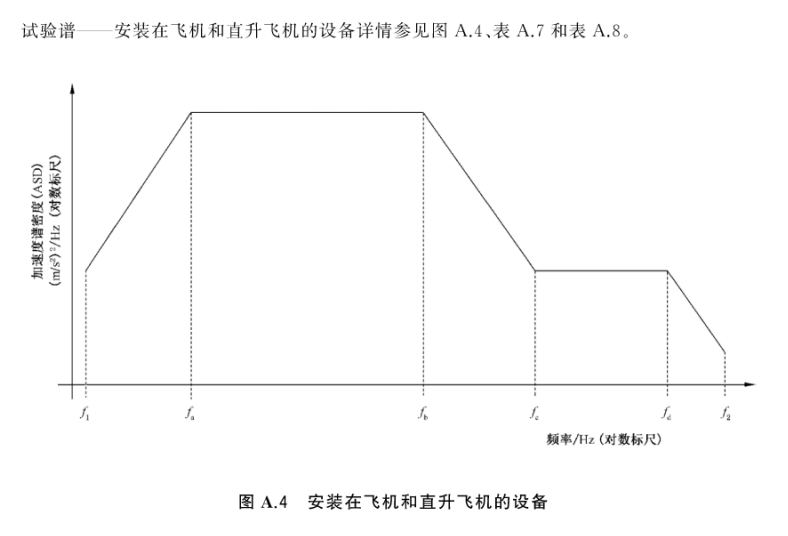
Spectrum A.4 Equipment installed in aircraft and helicopters-Table A.7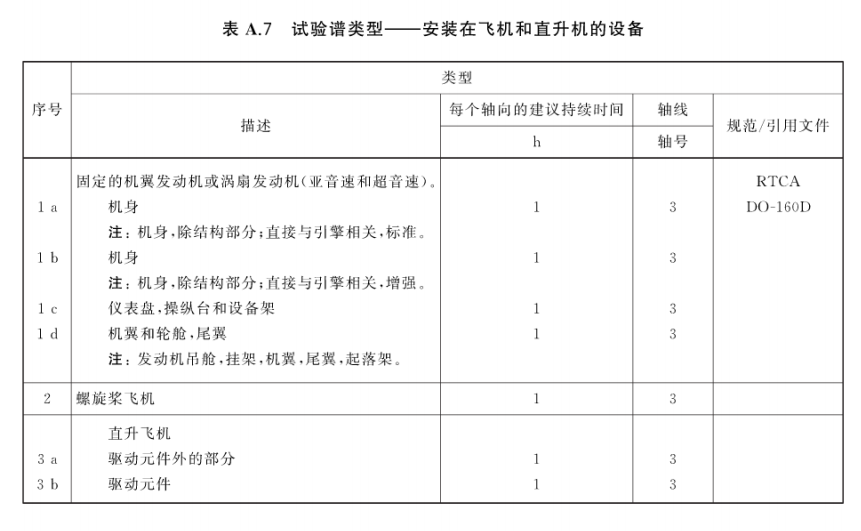
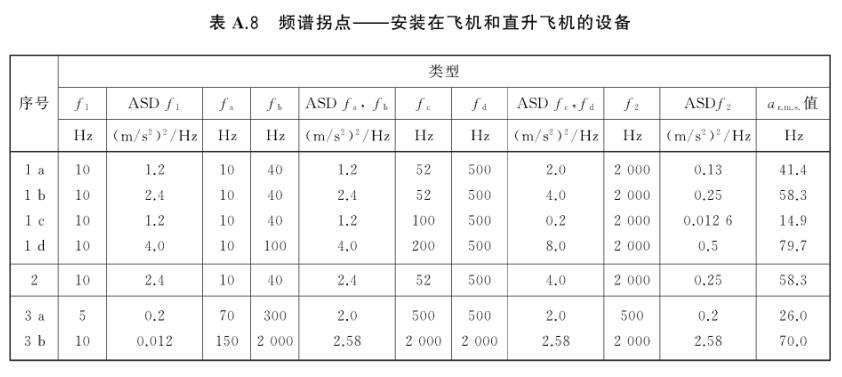
Spectrum A.4 Equipment installed in aircraft and helicopters-Table A.8
 WeChat


 Submission Successful
 WeChat Official Account