-
Xuntong specializes in testing services for electrical accessories, consumer electronics, lighting, wireless, toys and other products.



 Service Hotline 18617145297
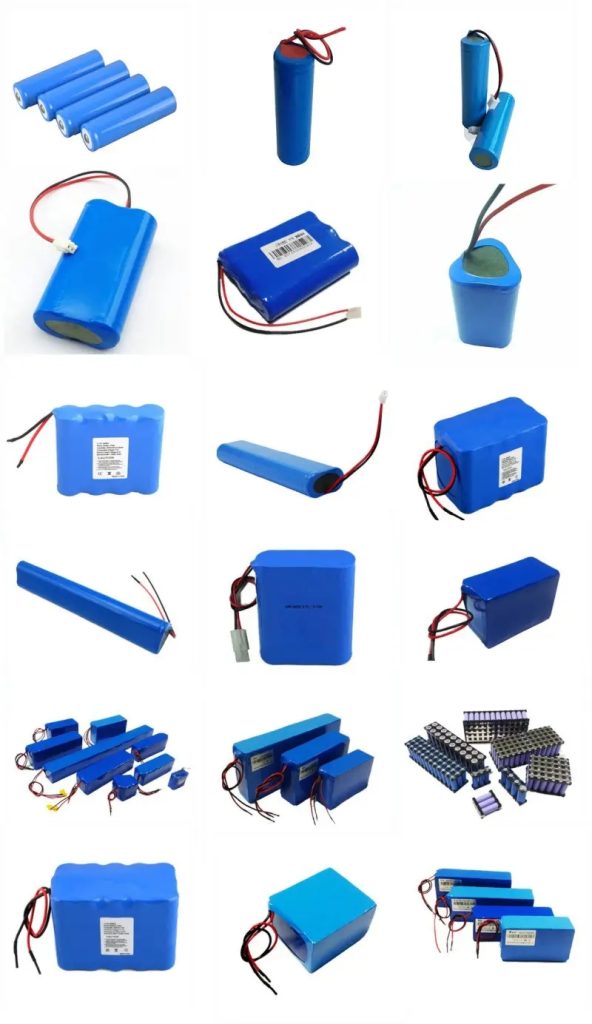
Lithium batteries are classified as dangerous goods and may pose a safety risk if they are not tested and packaged in accordance with transportation regulations. UN/DOT 38.3 testing helps ensure the safety of lithium ion or lithium metal batteries during transportation.
Transportation of lithium batteries is subject to national and international regulations detailed by the United Nations (UN) in Section 38.3 of the United Nations Manual of Tests and Standards (UN 38.3, the United Nations International Air Transport Association (IATA) and the U.S. Department of Transportation, which regulates U.S. transportation regulations under 49 CFR Sections 100-185.
UN/DOT 38.3 details the environmental, mechanical and electrical requirements for all lithium batteries and batteries. Manufacturers of lithium batteries and products using lithium batteries must demonstrate that their products are designed, manufactured and sold in compliance with standards.
The eight UN 38.3 test requirements applicable to the transportation of lithium batteries include:
t1-Altitude simulation (primary and secondary batteries and battery packs)
Low-pressure test simulating an unpressurized aircraft cargo bay at an altitude of 15000 meters. After storing the battery at 11.6 kPa for more than 6 hours, these criteria should be met: no mass loss, leakage, venting, decomposition, rupture or fire, and a voltage within 10% of the voltage before the test.
T2-Thermal test (primary and secondary batteries and batteries)
The tests covered extreme temperature changes from-40C to +75C. The cells were stored at-40C for 6 hours (12 hours for large cells/batteries) and then at +75C for 6 hours (12 hours for large cells/batteries) for a total of 10 cycles.
T3-Vibration (primary cells, secondary cells and batteries)
The test simulates vibration during transportation. The test was a sinusoidal scan: 7Hz-200Hz-7Hz over 15 minutes;12 cleanups (3 hours);3 mutually perpendicular axes.
T4-Electric shock (primary battery, secondary battery and battery pack)
The test also simulated vibration during transportation. The test is half-sinusoidal pulses:150 g/6 milliseconds, suitable for small batteries/batteries;50 g/11 milliseconds, suitable for large batteries; 3 pulses in each direction;6 directions (+/-z,+/-x,+/-y).
t5-External short circuit (primary battery, secondary battery and battery pack)
This test simulates an external short to a battery or battery terminal. At a temperature of +55C, apply a short circuit (0.1 ohms) between the terminals. Hold it for at least one hour after the sample temperature returns to +55+/-2 ° C. The passing criteria are that the housing temperature does not exceed +170 ° C and that there is no disassembly, rupture or fire within 6 hours of testing. Allows activation of fuses, current-limiting circuits and venting mechanisms.
T6-Impact (primary and secondary batteries)
This test applies only to primary and secondary batteries. For a cylindrical battery with a diameter of 20 mm, it simulates the impact on the battery housing.
T7-Overcharge (Secondary Battery)
This test is only for secondary or rechargeable batteries. It simulates the overcharge state of a rechargeable battery: twice the manufacturer’s recommended charging current within 24 hours. Then, the battery should be monitored for 7 consecutive days for fire or decomposition.
t8-Forced discharge (primary and secondary batteries)
This test only simulates the forced discharge conditions of primary and secondary batteries.
 WeChat


 Submission Successful
 WeChat Official Account