-
Xuntong specializes in testing services for electrical accessories, consumer electronics, lighting, wireless, toys and other products.



 Service Hotline 18617145297
National e-cigarette import and export regulatory policies Currently, there are differences in e-cigarette regulatory policies around the world, mainly due to whether e-cigarettes contain nicotine. There are roughly the following types:
01 Contains nicotine, regulated as tobacco
For example, China, the United States, Germany and other countries regulate e-cigarettes containing nicotine as tobacco products, strictly restrict production, sales, product claims, etc., and stipulate that sales to minors are prohibited.
02 Contains nicotine and is regulated as a drug
For example, Japan, the United Kingdom and other countries regulate e-cigarettes containing nicotine as drugs, while the Philippines regulates e-cigarettes as medical device items and prohibits the free flow of e-cigarettes in the market.
03 Does not contain nicotine and is regulated as a general consumer product
Some countries allow the circulation of nicotine-free e-cigarettes. For example, Australia and some European Union countries regulate nicotine-free e-cigarettes as general consumer goods.
04 Interpretation of my country’s e-cigarette policy
The “Measures” stipulate that on May 1, 2022, the “Measures” will be officially implemented, stipulating that “e-cigarette products shall comply with the mandatory national standards for e-cigarettes.”
On April 8, 2022, the State Administration for Market Regulation issued mandatory national standards for e-cigarettes. The standard includes four contents, namely, clarifying the terms and definitions related to e-cigarettes and aerosolized substances; requiring e-cigarette design and raw material selection standards; putting forward precise technical requirements for its smoking equipment, aerosolized substances and released substances; and strictly stipulating e-cigarette product logos and instructions. It can be summarized that e-cigarettes have the following characteristics:
(1) The aerosol contains nicotine.
Interpretation: Products similar to e-cigarettes that do not contain nicotine (nicotine) or are not used to convey nicotine (such as herbal nebulization) should not be labeled as e-cigarettes, and should be clearly marked on the packaging “This product does not contain nicotine (nicotine) ingredients” or “This product is not used to convey nicotine (nicotine)”.
(2)Tobacco monopoly products such as tobacco leaves (including reconstituted tobacco leaves and tobacco stems, the same below), re-cured tobacco leaves, and shredded tobacco used to extract nicotine for e-cigarettes must be purchased from tobacco companies that have the rights to operate tobacco leaves, re-cured tobacco leaves, shredded tobacco, etc., and the purity of the extracted nicotine should not be less than 99%.
Interpretation: Electronic cigarettes cannot use synthetic nicotine.
(3)E-cigarette smoking sets and cigarettes that use e-cigarette liquid should have a closed structure to prevent human filling, that is, e-cigarettes are a closed structure that cannot be artificially filled.
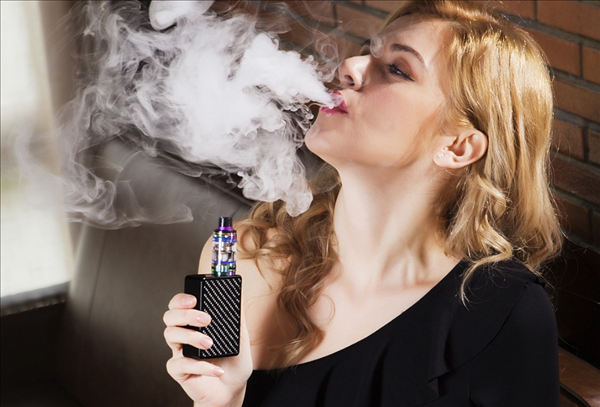
Interpretation: Ban open e-cigarettes.
(4)E-cigarette smoking sets and cigarettes that use e-cigarette liquid should have good sealing properties and should not leak.
(5)The nicotine concentration in e-cigarette aerosols should not exceed 20mg/g, and the total amount of nicotine should not exceed 200mg. The nicotine release should not exceed 0.2 mg/puff.
Interpretation: Before the market was regulated, the nicotine concentration of mainstream e-cigarette products was 50mg/g or 30mg/g.
The new standard controls the amount of nicotine released per inhale. Release amount refers to the amount of a substance or type of substance released from e-cigarettes under standard smoking conditions.
(6)The temperature in the atomization area should not be higher than 350℃.
(7)It should not be inducement to minors, and the characteristic flavor of the product should not be made to present other flavors than tobacco.
Interpretation: The taste of e-cigarettes should not induce minors, that is, in addition to tobacco and mint flavors, e-cigarette products do not include other flavors such as fruit.
(8)E-cigarette smoking sets should have child-proof starting functions and protective functions to prevent accidental starting.
Interpretation: Protect children and prevent children from eating it by mistake.
(9)Standard additives can only be put on the market after safety risk assessment and experimental verification.
Interpretation: Limit the use of additives and control the health hazards caused by additives. In addition, Article 43 of the Measures states that heated cigarettes (a common brand on the market is IQOS) will be included in cigarette management. Although electronic heaters are used to heat cigarettes, the essence of the cigarette cartridge is still tobacco and does not belong to the category of electronic cigarettes.
 WeChat


 Submission Successful
 WeChat Official Account