-
Xuntong specializes in testing services for electrical accessories, consumer electronics, lighting, wireless, toys and other products.



 Service Hotline 18617145297
What is UN38.3
UN38.3 is a testing standard, referred to as “United Nations Manual of Tests and Standards, Part 3, Subsection 38.3.
It is specially designed for the safe transportation of lithium metal and lithium ion batteries and batteries and covers eight different test projects designed to simulate the air/sea/land transportation environment and possible hazardous situations.
Why do you need to conduct UN38.3 testing?
The test objects of UN38.3 are lithium batteries and lithium batteries, which are mainly composed of negative electrode materials, electrolytes and positive electrode materials. The chemical activity of cathode material graphite in the charged state is close to that of lithium metal, and the SEI film on the surface decomposes at high temperatures. Lithium ions in graphite react with the electrolyte and the binder polyvinylidene fluoride (PVdf), producing a large amount of heat. From this perspective, lithium-ion batteries do pose certain risks. Especially when abused or affected by external factors, security issues will become more prominent.
Lithium batteries are widely used in mobile communication equipment, electronic digital products, power products, medical and security products. After being produced in factories, these products must be transported by land, sea and air if they want to circulate normally domestically and around the world.
As a dangerous product, lithium batteries cannot be controlled due to their active chemical properties and changes in the environment during transportation, as well as some accidents during transportation. If the quality of some lithium batteries does not meet the standards and are loaded into the cargo hold, a fire and explosion are likely to occur.
Airlines are increasingly monitoring the transportation of lithium batteries and cargo containing them. In order to avoid accidents during transportation of lithium batteries, electronic products or lithium batteries containing lithium batteries must be certified to meet the test requirements of UN38.3.
In addition, the Civil Aviation Administration also stipulates that airlines and airport cargo collection and transportation departments should review various transportation documents for lithium batteries. The most important thing is the UN38.3 safety test report for each lithium battery. If the test report cannot be provided, the transportation of lithium batteries will be prohibited.
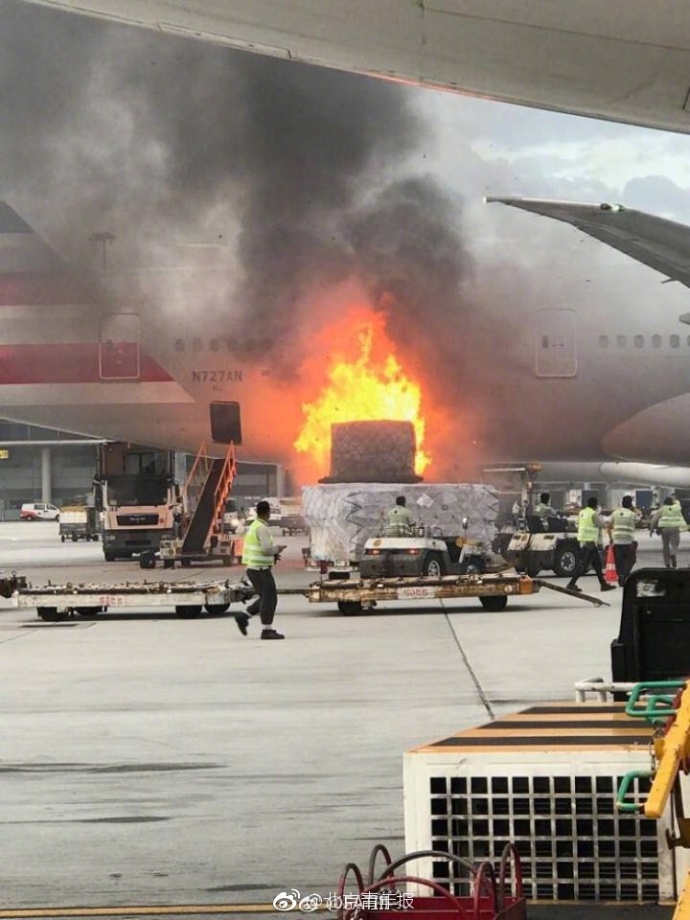
Lithium-ion batteries caught fire repeatedly during transportation. Here is an example. At 2 pm on January 8, 2017, an air cargo container suspected of carrying lithium batteries caught fire on the tarmac of Hong Kong International Airport, emitting a large amount of smoke. Airport firefighters arrived at the scene 4 minutes after receiving the alarm, and the fire broke out about 25 minutes later. Fortunately, the cargo did not get on the plane. Otherwise, this will be an unimaginable disaster. The airline punished the consignors involved, and the airline has blacklisted the consignors.
What makes lithium batteries unsafe
Generally speaking, the safety problems of lithium-ion batteries manifest themselves as combustion or even explosion.
(1)The root cause of these problems is thermal runaway inside the battery. Lithium-ion batteries produce heat throughout the discharge and charging process. Assume that the heat generated exceeds the battery’s heat dissipation capacity. In this case, the lithium-ion battery will undoubtedly overheat and the battery material will definitely damage the SEI film, causing the electrolyte to decompose and the electrode to decompose.
(2)Some external factors, such as short circuits, overcharging, crushing, nail penetration, etc., It can also cause security issues.
A short circuit caused most lithium batteries to catch fire and explode. An internal short circuit in the battery causes a large amount of current to discharge, which generates a large amount of heat and burns the membrane, leading to a more specific short circuit phenomenon, which causes the electrolyte to decompose into gas. If the internal pressure is too high, the battery will explode. The reason for the internal short circuit of the battery may be the design reason or quality of the battery material, or it may be caused by vibration, impact, impact, and extrusion during transportation.
An external short circuit may be caused by the wrong connection of the positive and negative electrodes. Due to an external short circuit, the battery discharge current is very large, which will cause the battery cell to heat up. High temperatures can shrink or eventually damage the membrane inside the battery cell, causing an internal short circuit and causing explosion.
When the battery is overcharged, excessive release of lithium from the positive electrode will change the structure of the positive electrode. If too much lithium is released, it can easily cause lithium to deposit on the surface of the negative electrode. In addition, when the voltage reaches 4.5 volts or more, the electrolyte decomposes to produce a large amount of gas. All of the above phenomena can cause an explosion.
 WeChat


 Submission Successful
 WeChat Official Account